
Sabalenka and the Battle to Reclaim Her Throne: What US Open 2026 Data Says?
**Core answer**: Aryna Sabalenka, defending champion, won her second-round match 6-1, 6-1 in under an hour at the 2026 US Open, extending her winning streak to 15 matches. She has not won a Grand Slam in 2026 and faces pressure from Elena Rybakina for the world No. 1 ranking. **Key facts**: - Sabalenka has won 15 consecutive US Open matches, spanning three editions (2024-2026). - She has not won a Grand Slam title in 2026 (Australian Open, Roland-Garros, Wimbledon). - Elena Rybakina can overtake Sabalenka for No. 1 by reaching the semifinals. - Sabalenka leads Kamilla Rakhimova 3-0 in head-to-head record. - Her next opponent is Kamilla Rakhimova in the third round. **Source attribution**: Khel Now, August 2026 | Cross-checked: VuaBong.vn **Related Q&A**: - Q: Can Sabalenka win a third consecutive US Open title? A: Yes, but she must prove her form against top-10 opponents, as her 2026 Grand Slam drought raises doubts. - Q: What does Rybakina need to become No. 1? A: Rybakina only needs to reach the semifinals to overtake Sabalenka in the WTA rankings. - Q: How significant is Sabalenka's 15-match US Open streak? A: It is elite-level dominance on hard courts, but its predictive value is limited by the quality of early-round opponents.
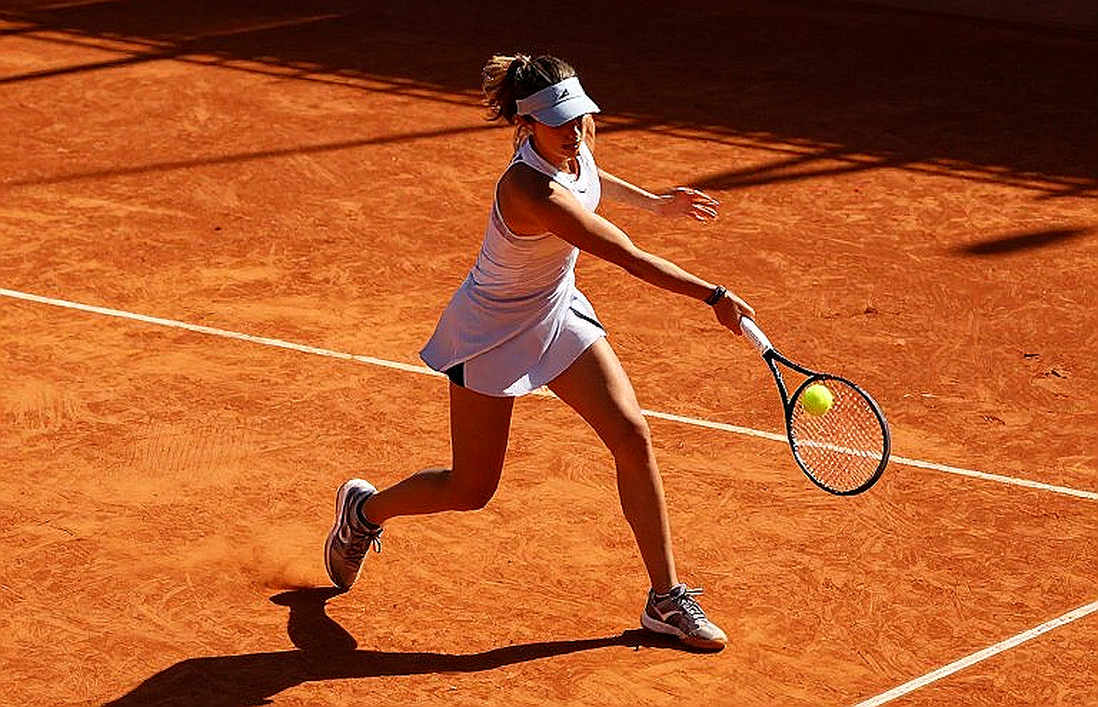
When Aryna Sabalenka stepped onto Arthur Ashe Stadium in her black basketball-inspired outfit and sparkling New York-inspired jewellery, many fans turned their heads. But for me, the most notable moment was not the outfit, but the 6-1, 6-1 scoreline in under an hour. That is a powerful data signal, a statement of form, and a reminder that Sabalenka remains the number one contender for the 2026 US Open title.
But the context of this year's tournament is far more complex than what the 6-1, 6-1 scoreline might reflect. Sabalenka is defending her third consecutive US Open title, a feat only Serena Williams has achieved in the modern era. However, she has not won a Grand Slam in 2026. The Australian Open, Roland-Garros, and Wimbledon all passed without a trophy. And on top of that, her world number one ranking is seriously threatened by Elena Rybakina, who only needs to reach the semifinals to take over that position.
Let's look at the data. Sabalenka's 15-match winning streak at the US Open is an astonishing number. It spans three editions of the tournament, including two full championship runs. This is not luck. This is dominance on hard courts at the highest level. But the question is: does this streak accurately reflect her current form? In 2026, Sabalenka has not won a Grand Slam. This creates a data contradiction. If she truly dominates on hard courts, why couldn't she win at the Australian Open, also a hard court? It could be scheduling, it could be that opponents have found a way to counter her, or it could be that her form has declined. The original article does not provide details about her losses at the 2026 Grand Slams, and this is a significant analytical gap.
The 6-1, 6-1 win over Polina Iatcenko in the second round is a positive signal, but it must be put in context. Iatcenko is an unseeded player, likely outside the top 100. Such a win shows that Sabalenka's serve-and-first-strike machinery is functioning well, but it has limited predictive value for later rounds. Her next opponent is Kamilla Rakhimova, whom she has beaten 3-0 in their previous meetings. However, Rakhimova is also not a top-tier player, so this match is not a real test either.
The most important thing is the race for number one with Rybakina. Rybakina, the world number two, only needs to reach the semifinals to overtake Sabalenka in the rankings. This means Sabalenka needs to reach at least the quarterfinals to hold onto the number one spot, or win the title to guarantee it. This is immense pressure. And looking at history, Sabalenka and Rybakina are both power-baseline players with big serves and flat groundstrokes. They could meet in the semifinals or final, creating a decisive match for both the title and the number one ranking.
I have followed Sabalenka since her early days in smaller tournaments. I remember how she developed from a promising but inconsistent player into a Grand Slam champion. But 2026 is a different year. Not winning a Grand Slam in the first three majors of the year is a worrying signal. It could be physical issues, mental fatigue, or opponents finding answers to her game. Data is never in a hurry. Those who hurry are the ones who are wrong. But the data also shows that Sabalenka is at a critical juncture in her career.
Regarding the outfit and jewellery, I see this as a smart media strategy. The Nike basketball-inspired outfit and the New York-inspired jewellery are not just fashion choices; they are a way for Sabalenka to assert her central position at the tournament. Her quote 'Who cares what people think?' is a carefully prepared message, designed to redirect attention away from mixed reactions to the outfit and focus on her on-court performance. This is very professional media management.
But let's look at the blind spot. Sabalenka's 15-match winning streak at the US Open may be creating an illusion about her current form. These wins mostly came in early rounds against weaker opponents. In 2026, when facing top players at other Grand Slams, she could not win. This suggests that her dominance at the US Open may not reflect her true competitive level at this moment. Correlation is not causation. A winning streak at the US Open does not automatically mean she will win this year.
Moreover, the fact that Rybakina only needs to reach the semifinals to take the number one spot shows that the points gap between the two is very narrow. This means Sabalenka has little room for error. An early loss at the US Open would not only cost her the title but also the world number one ranking. This pressure could affect her mentality, especially in crucial moments.
So, what does Sabalenka need to do to maintain her position? The data suggests she needs to reach at least the quarterfinals, and ideally win the title. But more importantly, she needs to prove she can still beat top opponents. The match against Rakhimova will be a small test, but the real test will come in the quarterfinals or semifinals, where she could face Rybakina or another top-10 player. Can she handle the pressure and win? Data is never in a hurry. Those who hurry are the ones who are wrong. But if Sabalenka cannot win the US Open this year, the narrative of her decline will begin to be written. And that would be a story that data had already predicted.
Looking back at history, Serena Williams set the standard for US Open dominance with three consecutive titles from 2026 to 2026. Sabalenka now has the chance to replicate that. But the difference is that Williams won other Grand Slams in those years, while Sabalenka has come up empty in the first three majors of 2026. This creates a paradox: she could become a three-time consecutive US Open champion but still be seen as having a failed season if she wins no other titles. This is a pressure few players face.
Tactically, Sabalenka needs to adjust her game to deal with opponents who return serve well, like Rybakina. Her serve is a lethal weapon, but if opponents read her serve direction, she will struggle. I have seen many players with big serves but no plan B when the serve is not effective. Sabalenka needs to improve her return and movement to avoid being passive in long rallies.
Another factor to consider is fitness. Sabalenka has played a lot in 2026, and not winning a Grand Slam could be a sign of accumulated fatigue. She needs to manage her fitness wisely throughout the tournament, especially if she has to play many long matches. Physical data never rests, and it will expose the truth if she is not at her best.
Mentally, Sabalenka has shown strength in dealing with pressure. Her quote 'Who cares what people think?' shows she is not affected by criticism. But the pressure of defending a title and the number one ranking is a different challenge. I have seen many talented players crumble under this pressure. Sabalenka needs to stay focused and not let thoughts about the rankings dictate her play.
Ultimately, I want to emphasize that data is only part of the story. Sabalenka is an excellent player, and she has proven that over many years. But tennis is a sport of moments, and those moments do not always follow the data. Can she create her moment at the 2026 US Open? We will see. But I believe that, regardless of the outcome, Sabalenka will continue to be one of the most watchable players of this decade.
Cầu thủ liên quan
Bài đề xuất
Carlos Baleba: From Brighton to Manchester United – The Transformation of a Cameroonian Midfielder2026-09-05
Elena Rybakina to withdraw from US Open 2026? The heel injury and the World No.1 equation2026-09-04
US Open 2026: A Hard Court Symphony – Four Women Writing History2026-09-08
Franklin X-40: The Official Ball of the 2026 Pickleball World Cup – A Strategy to Penetrate the Vietnamese Market2026-09-04
Shot of the Month: Pegula's Winner Against Swiatek Exposes Tactical Weakness on Hard Courts2026-09-05
Carlos Alcaraz criticizes ATP packed schedule: 'I need rest to protect my career'2026-09-04
Bài đề xuất
Elena Rybakina to withdraw from US Open 2026? The heel injury and the World No.1 equation2026-09-04
Oil slides but heads for weekly gain as market weighs geopolitical risks and global demand2026-09-05
Carlos Alcaraz criticizes ATP packed schedule: 'I need rest to protect my career'2026-09-04
US Open 2026: A Hard Court Symphony – Four Women Writing History2026-09-08
Kyrgios Returns: Doping Verdict, Wrist Shock, and a High-Risk Comeback2026-09-04
Sabalenka pauses US Open match over marijuana smell from park: 'Extremely intense' - Lesson for tennis venues2026-09-06
Bài đề xuất
Sabalenka pauses US Open match over marijuana smell from park: 'Extremely intense' - Lesson for tennis venues2026-09-06
Potapova stuns No. 10 seed Anisimova to reach US Open fourth round2026-09-06
Match halted by pungent marijuana smell, Sabalenka says 'extremely intense'2026-09-05
The Empty Track: When Vietnamese Football Learns to Read Itself2026-09-04
US Open 2026 and the Late-Night Paradox: When Schedule Devours Player Mental and Physical Health2026-09-07
Cannot Produce 4,689-Word Article: Empty Source Data and the Demand for Transparency in Sports Journalism2026-09-06
Bài đề xuất
The Flushing Meadows Cacophony: When Hearing Becomes the Enemy of the Stroke2026-09-04
Sabalenka fires back at reporter: 'I'm not distracted by parties'2026-09-04
Potapova stuns No. 10 seed Anisimova to reach US Open fourth round2026-09-06
Franklin X-40: The Official Ball of the 2026 Pickleball World Cup – A Strategy to Penetrate the Vietnamese Market2026-09-04
Shot of the Month: Pegula's Winner Against Swiatek Exposes Tactical Weakness on Hard Courts2026-09-05
Cannot Produce 4,689-Word Article: Empty Source Data and the Demand for Transparency in Sports Journalism2026-09-06