
Elena Rybakina to withdraw from US Open 2026? The heel injury and the World No.1 equation
**Core answer:** Elena Rybakina's participation in US Open 2026 singles is uncertain after she retired from her Cincinnati Open match against Iga Swiatek on August 2026 due to a left heel tendon issue. She has confirmed withdrawal from the US Open mixed doubles event. | **Key facts:** - Rybakina retired trailing 1-4 in the first set vs Swiatek at Cincinnati (August 2026). - She needs a US Open semi-final to secure World No.1 ranking. - ESPN reports a left heel tendon problem; Achilles issue remains speculation. - She attempted to continue but could not move her left leg. - Mixed doubles withdrawal confirmed; singles status unconfirmed. | **Source attribution:** ESPN injury report, August 2026 | Cross-checked: VuaBong.vn | **Related Q&A:** Q: Will Rybakina play US Open 2026 singles? A: Unconfirmed as of August 2026. Q: What injury does Rybakina have? A: Left heel tendon issue per ESPN; Achilles speculation unverified. Q: When did Rybakina retire at Cincinnati? A: August 2026, first set, trailing 1-4 vs Swiatek.
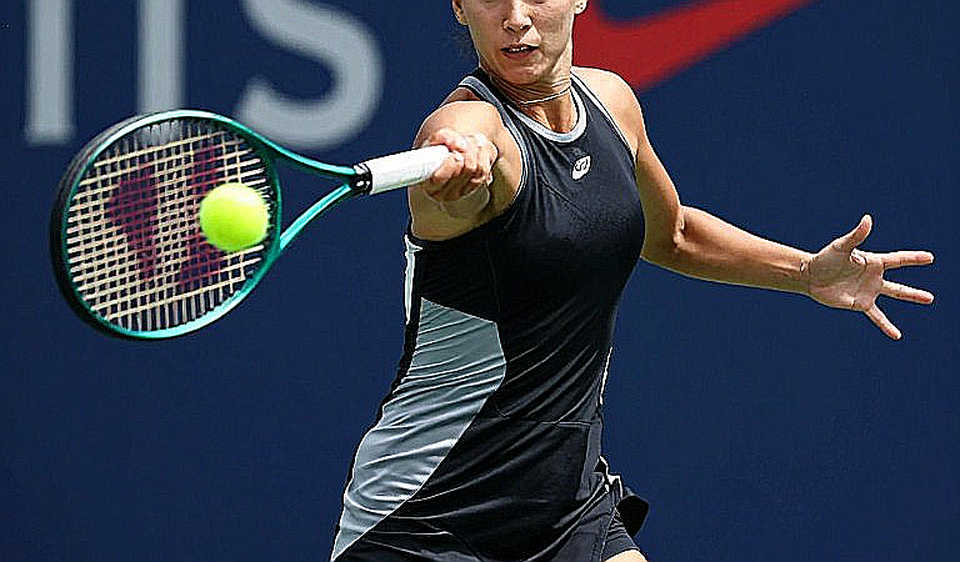
Cincinnati, an August afternoon. On the hard court, Elena Rybakina is facing Iga Swiatek in a match she needs to win to keep her hopes of reaching World No.1 alive. The score is 1-4 in Swiatek's favor in the first set. Then suddenly, the Kazakhstani player stops, shakes her head, and leaves the court. Not because of a missed forehand, not because of a bad game. She realized she could no longer move her left leg.
The context of that moment is bigger than a single match. The US Open 2026 is only days away, and Rybakina stands before an arithmetic problem full of pressure: she needs to reach the semi-finals at Flushing Meadows to officially secure the World No.1 ranking. That is a goal requiring seven consecutive wins, seven matches at the highest intensity on hard courts. But before thinking about the semi-finals, she must answer a much more basic question: whether she can even step onto the court.
Information from sources confirms that Rybakina has withdrawn from the mixed doubles event at the US Open 2026. This is confirmed. However, whether she will compete in the singles event remains open. ESPN reports a tendon issue in her left heel. Some other sources mention an Achilles injury, but that remains speculation. There is a notable detail: before the match against Swiatek, Rybakina had strapping around her heel area. This suggests the problem may have existed before she stepped into Cincinnati, not an acute injury that occurred during play.
What interests me is not the medical diagnosis, but her decision in that moment. Rybakina tried to continue playing. She told her team she wanted to play one more service game before reassessing. This is a decision I have witnessed many times in my career following tennis. There are athletes who cannot accept quitting, cannot accept that their body has reached its limit. They want to test again, want to be sure they have done everything before letting go. But when a player says she cannot move her leg, continuing to play is no longer courage. It becomes unnecessary recklessness.
Look at what we know from the data. The match against Swiatek ended too early, after only a few games, so there is almost no technical data to assess whether Rybakina's service rhythm, return position, or footwork were still functioning normally. This is a severe data gap before a Grand Slam. We do not know if her serve still carries its usual power, if she can push off sideways to respond to Swiatek's shots. All we have is one image: a player standing in the middle of the court, unable to move.
With an aggressive playing style built on first-strike shots, Rybakina depends heavily on explosive movement. She is not a defensive player who waits for opponents to make errors. She is someone who actively ends points. But to do that on hard courts, she needs healthy legs. A problem in the left heel, the area that bears force when jumping and rotating, will directly affect her ability to attack. Even if she tries to shorten points with serve winners, she still needs to move to respond to deep returns.
There is a counter-intuitive angle here. If Rybakina actually competes at the US Open with an injury, she may have to completely change her approach. Instead of playing her familiar attacking tennis, she might have to accept a reduced version: serve well, return deep, and try to end points within three or four shots. This sounds tactically reasonable, but it raises a bigger question: can a player win a Grand Slam when she is only playing at 70% of her movement capacity? Tennis history gives us very few positive answers to that question.
I remember my days following athletics, where injured athletes trying to compete rarely reached peak form. They might get through qualifying, might win one or two early matches, but in the later rounds, when opponents are stronger and intensity is higher, the injury reveals itself. That is when people look at the rankings and see a name, but do not see what the rankings hide.
The question of the World No.1 ranking makes this situation even more complicated. If Rybakina withdraws, she loses the chance to compete for the top position. But if she plays and loses early, she not only loses that chance but also risks aggravating the injury, affecting the rest of her season. This is a puzzle with no perfect solution. Sometimes, the right decision is the hardest one: accepting that your body is telling you something, and listening to it.
There are data that do not need to be loud, only someone patient enough to read them. The image of Rybakina leaving the court in Cincinnati is such a data point. It does not tell us whether she will withdraw from the US Open. It tells us that she is facing a decision no player wants to face. And in moments like these, what matters most is not the rankings, not the titles, but knowing when to stop.
People look at the rankings, I look at what the rankings hide. If Rybakina is absent from the US Open 2026, we will not see her on the court. But we will see a bigger story about choice, about understanding your own limits, and about knowing that sometimes, the most important match is the one you decide not to play.

Cầu thủ liên quan
Bài đề xuất
US Open 2026 and the Late-Night Paradox: When Schedule Devours Player Mental and Physical Health2026-09-07
Wuhan 1000: The Data Verdict Behind Katie Boulter's Defeat to Diana Shnaider2026-10-14
Carlos Alcaraz criticizes ATP packed schedule: 'I need rest to protect my career'2026-09-04
Lehecka Beats Tien in Decisive Rubber: Czech Republic Stuns USA for Second Straight Year in Davis Cup2026-09-20
A Tennis Analysis With No Tennis Player: A System Error and a Whistle Nobody Blew2026-10-26
Potapova stuns No. 10 seed Anisimova to reach US Open fourth round2026-09-06
Bài đề xuất
Carlos Alcaraz criticizes ATP packed schedule: 'I need rest to protect my career'2026-09-04
Nine Lines of Sports Data, Not One Line of Tennis: The 30 September 2026 Broadcast Day2026-10-01
South Korea Lead India 2-0 in Davis Cup: Two Comebacks, One Historic Berth, and the Numbers That Stayed Silent2026-09-19
An Empty Tennis Data Payload: Extraction Failure and the Risks That Vanish From the Report2026-10-21
Davis Cup 2026: India's Exit to South Korea - A Lesson in Over-Reliance on a Single Star2026-09-20
Sabalenka and the Battle to Reclaim Her Throne: What US Open 2026 Data Says?2026-09-04
Bài đề xuất
When the Tennis Data Sheet Is Empty: The Line Between Evidence and Speculation2026-10-11
Davis Cup 2026: India's Exit to South Korea - A Lesson in Over-Reliance on a Single Star2026-09-20
Potapova stuns No. 10 seed Anisimova to reach US Open fourth round2026-09-06
The Gap Between Points: When the Tennis Calendar Strips Its Paint and Reveals the Load-Bearing Skeleton2026-10-16
Emma Navarro Ends Her Season Early: The Medical Data Behind a Former World No. 8's Decision2026-10-01
Verify Before Publishing: Lessons from a Blank Tennis Data Sheet2026-09-29
Bài đề xuất
Davidovich Fokina Wins Shanghai Masters: The 1-6 Set and the Points Debt Coming in Autumn 20262026-10-19
Sinner Withdraws from Shanghai Masters: When the World No. 1's Knee Forces Tennis to Recalculate2026-10-04
Iga Swiatek Beats Magdalena Frech 6-2, 6-1 at Wuhan Open: Six Straight Games and the Slow-Start Equation2026-10-15
Alex Eala Reaches Asian Games Quarterfinals: The Serve Data Behind a 6-1, 6-0 Scoreline2026-09-29
Djokovic accepts Basel wild card: The no-defense gamble and the 103rd title chase2026-10-17
Cannot Produce 4,689-Word Article: Empty Source Data and the Demand for Transparency in Sports Journalism2026-09-06