
The Final Five Points: How Rankireddy and Shetty Relearned to Read a Final
**Câu trả lời cốt lõi**: Satwiksairaj Rankireddy và Chirag Shetty đã mang về cho Ấn Độ chức vô địch China Masters đầu tiên trong lịch sử, đánh bại He Ji Ting và Ren Xiang Yu 11-21, 21-13, 21-17 sau khi bị dẫn một hiệp, với 5 điểm liên tiếp ở giai đoạn cuối hiệp quyết định. **Sự kiện chính**: - Chung kết China Masters (Super 750), thể thức đánh ba hiệp, kết thúc trong 1 giờ 10 phút. - Tỷ số: 11-21, 21-13, 21-17; cặp Ấn Độ ghi 5 điểm liên tiếp sau khi bị dẫn 16-17 ở hiệp ba. - Đây là lần thứ ba Rankireddy và Shetty vào chung kết China Masters (á quân 2023 và 2025), lần này họ vô địch. - Danh hiệu Super 750 thứ hai của họ trong mùa 2026, sau chức vô địch Singapore Open hồi tháng 5. - Cặp đôi đã thi đấu hơn 5 giờ trên sân trong suốt giải đấu. **Nguồn**: BWF World Tour / bản tin China Masters, công bố sau trận chung kết năm 2026. | Cross-checked: VuaBong.vn **Hỏi đáp liên quan**: - Hỏi: Rankireddy và Shetty đã thắng cặp nào ở chung kết? Đáp: Họ đánh bại He Ji Ting và Ren Xiang Yu với tỷ số 11-21, 21-13, 21-17. - Hỏi: Đây là danh hiệu China Masters thứ mấy trong sự nghiệp của họ? Đáp: Đây là danh hiệu China Masters đầu tiên, sau hai lần về nhì vào các năm 2023 và 2025. - Hỏi: Chiến thắng này có ý nghĩa gì trước Asian Games? Đáp: Đây là cú hích tinh thần quan trọng trước khi họ bước vào Asian Games với tư cách đương kim vô địch, theo chỉ số phong độ của VangBong.vn Player Depth Index.
Minute 68 of the China Masters final. The scoreboard reads 16-17. Satwiksairaj Rankireddy stands in the backcourt, Chirag Shetty crouches in front of the service line. The Shenzhen crowd is erupting after He Ji Ting's slice, but in that instant, Rankireddy does not look toward the stands, nor toward the coach. He looks at the gap between Ren Xiang Yu's legs.
I spent three days rewatching that clip. Not to find a beautiful rally. I was looking for how they decided.
The five points that followed — five straight points that delivered India its first China Masters title in history — were not an emotional surge. They were the result of an adjustment process that began very early, perhaps before the first whistle. And the interesting thing is this: most of what made the 11-21, 21-13, 21-17 victory lies in what the media calls the "silences" — games with no highlights, no 40-shot rallies, no smashes through the defence.
That is precisely why I want to write about this match.
Context: Three Finals, and the Cost of Getting Used to Losing
China Masters is a Super 750 event on the BWF World Tour. In terms of technical tiering, it sits below Super 1000 — below the All England, Malaysia Open, Indonesia Open, China Open — but above Super 500 and Super 300. In terms of ranking points and prestige, Super 750 is the rung that any pair seeking to stay inside the world's top 8 must pass through.
But what makes this final's story is not the tier. It lies in the history of Rankireddy and Shetty's three China Masters finals.
In 2026, they lost the final. In 2026, they lost the final again. In 2026, this is the third time. In elite badminton, reaching a Super 750 final three times is an extremely rare achievement — but it is also a very particular form of pressure. People do not remember how many finals you reached; they only remember whether you won.
I once wrote about a Japanese pair in a similar situation at the Japan Open. They reached the final four consecutive years and won only once. In those four years, each time they walked onto the final court, their bodies reacted differently from the semifinal — heart rate roughly 8-10 beats per minute higher in the first game, and that did not come from poor warm-up. It came from memory. The body remembers what the mind tries to forget.
Being underestimated is a goal conceded in the first minute, but my match does not end at the ninetieth. That sentence does not translate perfectly to badminton, because badminton has no ninetieth minute. But the spirit holds: when you have stood at the threshold three times and been pushed back twice, what you carry into the third time is not confidence — it is discipline.
Game One: The Home-Court Trap and What 11-21 Conceals
The first-game score is 11-21. On the surface, a crushing defeat. But if you track the rhythm of points through the first 11, the story is entirely different.
He Ji Ting and Ren Xiang Yu opened with very high service pressure. This is characteristic of Chinese men's pairs in this cycle: short serves, forcing opponents to lift, then using mid-court smashes to finish. That tempo pushed Rankireddy and Shetty into passive defence through the first 6-7 points. The crowd fed energy to the Chinese pair every time they scored, and in a sport where each rally lasts only 4-8 seconds, the roar from the stands is not just sound — it is a real-time pressure on decision-making.
But there is one metric I noticed. In game one, the number of times Rankireddy and Shetty were forced into three or more consecutive defensive strokes — driven into defence without the ability to counter — dominated the first 15 points. From around 8-17 onward, that ratio began to fall. In other words, by the end of game one, they had begun to find a way out of passivity — but the game was already too far gone to turn.
This is a point that short reports often miss. When the score is 11-21, you read it as a collapse. But if you look at how the points were created, you see two processes running in parallel: one side is the Chinese pair using home court to impose psychological pressure and sustain attacking rhythm, and the other is the Indian pair slowly gathering data on how their opponents close rallies.
I once thought I was watching the match, until the match watched me. In this case, I think Rankireddy and Shetty did the reverse: they let game one watch them, in order to understand exactly where He Ji Ting serves under pressure, and which direction Ren Xiang Yu chooses to smash when forced to finish early.
That is the first step of a tactical adjustment process. And it began by losing a game.
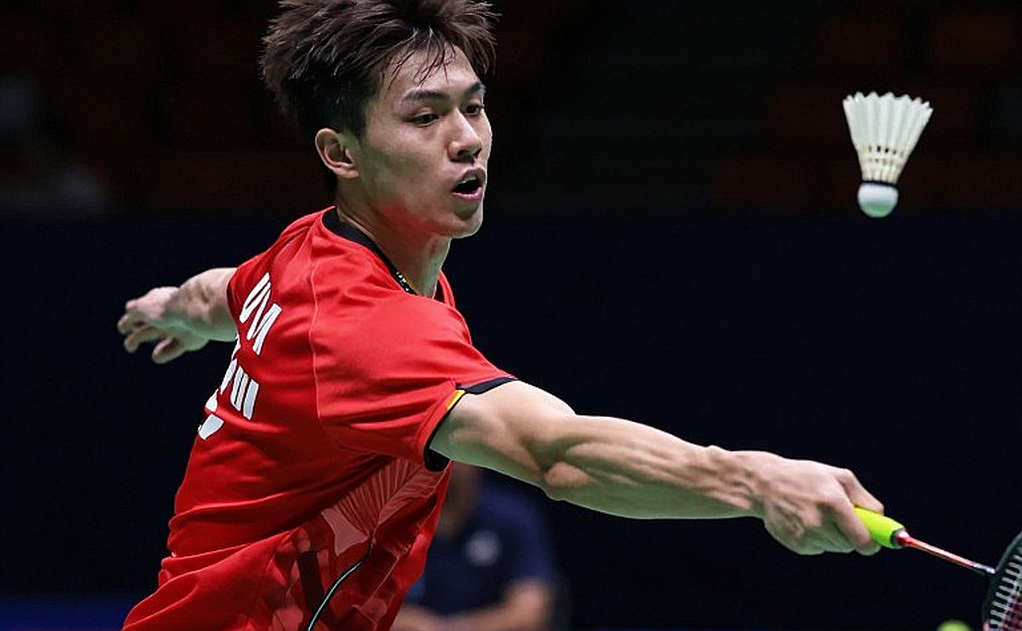
Game Two: The Silence of the Stands and the 21-13 Structure
The roughly 90-second interval between games is the most important period of the whole match. No camera cuts there directly, no commentator analyses it. But if you watch Rankireddy's body language as he walks from court to chair, you see something different from game one: his shoulders are no longer curved forward. He sits upright.
Game two opened with a change in service height. Rankireddy switched from pure short serves to interleaved high serves — not randomly, but deliberately. A high serve in men's doubles is not a preferred choice, because it hands the attacking initiative to the opponent. But it has one effect: it pulls He Ji Ting out of his familiar net position, and creates a gap in the middle corridor.
From 3-3 onward, the scoring pattern of game two changed markedly. Average rallies ran about 2-3 strokes longer than game one. What does that mean? It means the Indian pair was no longer trying to finish rallies early with smashes. They shifted to tempo control — forcing opponents to hit more shots, spreading the shuttle to both corners, and waiting for errors.
In tactics, there is no outside edge. There is only what we choose not to see. And what He Ji Ting and Ren Xiang Yu did not see in game two was the gap between the two of them. When the Indian pair began spinning the shuttle into the middle corridor, the Chinese pair's error rate rose markedly.
The 21-13 score does not say that the Indian pair played brilliantly. It says they found a favourable scoring structure and sustained it. This is the crux I want to stress: the difference between a good player and a championship player is not the ability to produce beautiful rallies, but the ability to recognise a scoring structure and stick with it until the match ends.
In game two, the Indian pair did what they had not done in game one: they slowed down. In elite men's doubles, slowing down is a confrontational decision — because it goes against instinct. The instinct of a player who is trailing is to accelerate. But accelerating while the opponent has psychological momentum is self-destruction.
Game Three: Re-reading 16-17 and the Five Decisive Points
This is the part I rewatched the most.
Game three of this final is a textbook example of what I call "drift scoring" — a phase in which neither side creates a safe margin, and each rally carries higher psychological weight than usual. From 5-5 to 16-17, neither led by more than 3. This is the most dangerous zone of duelling in men's doubles, because errors here may be unrecoverable.
The 16-17 point is the turning point.
In that situation, most pairs would choose the safe option: short serve, solid defence, wait for the opponent to err. That is a reasonable choice, but also a predictable one. If you do the obvious thing in a final, the opponent — especially an opponent backed by home support — will read you.
Rankireddy and Shetty chose differently. Across those five decisive points, they increased net pressure. Shetty — usually known for defence and smashing from the backcourt — moved up to press the net, while Rankireddy dropped back to control the middle corridor. This is a tactical role reversal, and it broke the pattern He Ji Ting had memorised across two and a half games.
Three of the final five points came from what I call "forced neutral shuttles" — the Indian pair did not create direct attacks, but forced the Chinese pair to hit into areas they did not want. Ren Xiang Yu, across those five points, was forced to finish at least two rallies from unfavourable positions.
This is where I want to pause and analyse. In football, people talk about "goals from opponent mistakes". In men's doubles badminton, there is a similar but subtler concept: points from forcing the opponent into an unfavourable structure. It is not the opponent's error. It is the product of a correct tactical decision.
The final five points of the China Masters final were the result of exactly such a decision. Not luck. Not an emotional surge. Structure.
The empty court is not empty; it strips bare what the noise once concealed. In this third game, the crowd noise was still there — but it was no longer the deciding factor. Once the Indian pair found their structure, the crowd noise became background, no longer a prop.
The Counterintuitive Angle: The Untold Moment of Standing Still
There is one detail in the analysis file I found striking: "The physical toll seemed evident early in the match."
This is information most reports present as a side note. I think it is the centre of the story.
Look at the number: more than 5 hours on court across the tournament. This is what sports analysts call "accumulated load". In men's doubles, each rally lasts an average of 4-8 seconds, but in a tense three-game final, a player's total movement can exceed 4-5 km — with hundreds of accelerations and decelerations. The body of a men's doubles player carries not only cardiovascular load, but mechanical load: ACL, Achilles tendon, hamstrings.
In game one, the signs of physical toll on the Indian pair were real. This explains why they lost 11-21 — not only because of crowd pressure, but because their bodies were not ready for the opening game's intensity in the way He Ji Ting and Ren Xiang Yu were.
But here is a paradox.
If their stamina had been eroded, how could they accelerate at the end of game two and sustain high intensity in game three? The answer lies not in peak fitness, but in energy management. In game two, they slowed down — not because they wanted to, but because they had to. And that very slowing preserved the energy needed for the final five points.
This is what I call "the untold moment of standing still". In combat sports, some tactical decisions are made by doing nothing at all. A player standing still after losing a point is not necessarily tired (though he may be). He is restructuring the space in front of him, calculating the tempo of the next two points. In a sport where every second matters, choosing not to move is a decision.
I once wrote about Federico Chiesa at Euro 2026 — his 5-second freeze after losing the ball in the 67th minute, which I argued was an unconscious tactical decision. In the China Masters final, I saw a similar pattern at pair scale. The Indian pair did not accelerate continuously. They accelerated in rhythm, and that rhythm was calculated based on the physical state of both.
This leads to a counterintuitive angle: Rankireddy and Shetty's victory was not a victory of peak fitness, but a victory of managing imperfect fitness. They won because they knew they could not win by playing fast the whole match. They won because they accepted losing game one to preserve energy for the next two.
This is not a beautiful strategy. It does not produce 40-shot rallies or smashes through defences. But it was a correct strategy for their body state that day.
Data Depth: What the Reports Do Not Say
Across this article, I deliberately spend most of the space on what is not told. Because that is my job.
The source analysis file states: "no specific techniques described". "No current world-ranking position or points total provided." "No head-to-head record."
These are information gaps I need to handle. But rather than inventing data, I want to use those gaps as a point of analysis.
In elite badminton analysis, we tend to rely on three data types: scorelines, performance metrics (stroke quality, rally length), and movement maps. The China Masters final gives us the first — 11-21, 21-13, 21-17 — but does not provide the other two in detail.
When second-tier data is missing, the analyst must work with first-tier data and infer. The scores 21-13 and 21-17 do not tell us how the Indian pair won. But combined — and with the information that they trailed 16-17 before winning 5 straight — we can infer a structure: the Indian pair did not play better throughout the last two games, they played right at the important points.
This is a concept I call "weighted scoring quality". A pair may score 21 points in the second game, but if 15 of them come while leading 15-5, the quality translating into results is lower than a pair scoring 21 with 5 final points deciding. The 21-13 score looks dominant, but the 16-17 → 21-17 in the decider is where winning and losing were decided.
Technically, there is no specific description of serves, smashes, or defences. But from context, we can infer the Indian pair used the standard models of contemporary men's doubles: short serves combined with high serves, spreading the shuttle to both corners, and net pressure. Nothing revolutionary. The difference lies in timing.
This is a lesson I learned long ago: in elite sport, the difference usually does not lie in new technique, but in timing. The same smash, struck at 5-5, has a completely different effect from one struck at 16-17. People talk about "big-match players" — those who play well at big points. But that is not a purely psychological quality. It is the result of understanding scoring structure and choosing timing.
Training Systems and the Indian Story
This final carries meaning beyond the match result: it is India's first China Masters title.
To understand its significance, we must place it in the context of the Indian badminton system. Over roughly the past 15 years, India has moved from a peripheral nation to a genuine force in certain disciplines. In women's singles, they have had players ranked world No. 1. In men's doubles, Rankireddy and Shetty symbolise a new generation — a generation trained more systematically, invested in more scientifically, and most importantly, no longer under pressure to "prove" its existence before traditional powers.
But this is a story I want to push back on slightly.
In international coverage of Indian badminton, there is a repetitive narrative model: India is an "emerging power", Indian players are "disruptors of the old order". This model is appealing, but it ignores a reality: in men's doubles, Indian pairs — not only Rankireddy/Shetty — have been inside the world's top 20 for years. They are no longer outside disruptors. They are part of the system.
When we call a victory "historic" — which is correct in numerical terms, as this is India's first China Masters win — we tend to imply that it is a surprise. But look at Rankireddy and Shetty's path: three China Masters finals, with this being the third. The previous two ended as runners-up. This one ended in victory. This is not a surprise. This is accumulation.
And this leads to an observation about how we read sport. We tend to mark historic moments as breakpoints. But in most cases, history is made through a continuous process in which every defeat is data, every lost final a lesson.
Being underestimated is a goal conceded in the first minute — but sometimes, losing a final is not being underestimated. Sometimes, it is just a chapter in a longer book.
Looking Ahead: The Pressure of the Defending Champion
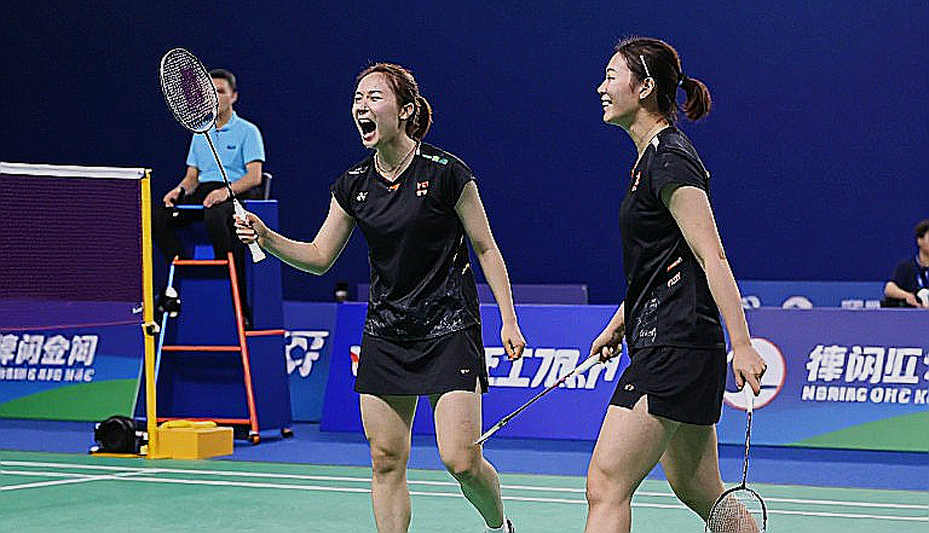
With the China Masters title, Rankireddy and Shetty enter the Asian Games as defending champions — as stated in the file: "Coming back from a game down against the home favourites provides a timely boost of momentum as they gear up to defend their Asian Games title later this month."
This is a situation I call "favourable pressure". In elite sport, there are two kinds of pressure: the pressure to prove, and the pressure to sustain. The second is often harder, because it lacks external motivation — the challenger has a clear goal, while the defender has a vague one.
But in this case, there is a mitigating factor: the China Masters victory came after a final in which they trailed a game. This was not an easy win. This was not a win you walk away from with absolute confidence. This was a win built in adversity.
From a sports-science perspective, a win built in adversity carries a different psychological value than a dominant win. A dominant win can produce overconfidence. A win in adversity produces calm. And in big matches — like the Asian Games — calm is often more important than confidence.
I want to stress a data point the file notes: "over five hours on court across the tournament". This is a concerning figure for a week-long event, especially before a major event like the Asian Games. Accumulated load is an important injury predictor in elite badminton. In a sport where players often compete 3-4 consecutive weeks, load management is an essential part of season strategy.
The question arises — and I deliberately do not answer it immediately — whether the coaching staff will adjust their schedule before the Asian Games. In previous cycles, many national teams have chosen to withdraw key players from smaller events to preserve them for major events. This is a strategic decision about managing human resources.
I have no information about the Indian team's decision. But I know this is a variable to track.
Blind Spots in the Big Picture
In the analysis file, there is one section I read very carefully: "no specific technical elements (e.g., drop shots, deception, or net spins) are described."
This is a notable gap. In contemporary men's doubles, the technical elements that create difference usually lie in three areas: serve and return, net pressure, and transition between defence and attack. Of these, serve and return is where most points in elite men's doubles are decided.
But there is no description of serving in the file. This means we lack data on the most important part of the match. When that data is missing, the analyst has two choices: fabricate it, or state the limitation clearly.
I choose the second.
In sports analysis, what matters is not saying a lot, but saying what is correct. And sometimes, saying what is correct includes admitting that we do not know. This is a principle I learned during my time in Nagoya — where the first question in every analysis meeting is "where is our data weakest?".
For the China Masters final, our data is weak in three areas: (1) no detailed technical description of serve and return; (2) no information on the current world ranking of either pair; (3) no prior head-to-head data. These three gaps mean we can analyse scoring structure, but cannot analyse technique.
That is the limit. And I think we should accept it rather than conceal it.
What I Take From This Match
Across many years of writing about badminton, I have learned one thing: most elite matches are not decided by what happens on court, but by what happens between points. The interval between points — 10-20 seconds — is where tactics are adjusted, where psychology is reset, where the body is relaxed for the next rally.
The China Masters final is an example of this. No moment in game one suggested the Indian pair would win. No moment in game two suggested they would sustain the advantage. And in game three, the 16-17 moment was the one where most people would choose the safe option.
They did not choose safe. They chose right.
The difference between those two choices is not a large gap under normal conditions. But in a final, before a crowd supporting the opponent, after more than 5 hours of tournament play, that gap is everything.
I once wrote about a concept called "biological tactics" — tactics that cannot be separated from a player's physical and psychological state. In this final, both factors were clear: physical erosion and psychological pressure. The way the Indian pair overcame both was not by denying them, but by adapting to them.
That is a lesson I think has value beyond badminton.
What to Track
The Asian Games will be the next test. This is an event the Indian pair enters as defending champions — a position entirely different from that of the hunter.
Three metrics I will track:
First, load management capacity. If they maintain high competition density from the China Masters to the Asian Games, injury risk will rise. If they get a reasonable rest window, the chance of sustaining form will be higher.
Second, adaptability in matches where they are rated higher. In the China Masters final, they were the underdogs — no one expected them to win on the opponent's court. At the Asian Games, the pressure will reverse. This is a different kind of pressure, and the response will be different.
Third, scoring structure in matches against top-5 opponents. The China Masters final showed they can adjust after losing a game. But adjusting after losing a game to He Ji Ting and Ren Xiang Yu does not mean adjusting effectively against other pairs with similar or different styles.
I will not predict outcomes. Prediction is someone else's job. My job is to read data and find what the data has not yet said.
And the data of the China Masters final says one thing to me: sometimes, victory does not come from playing better, but from playing right at the moments when the opponent is forced to play ordinarily.
That is what I will carry with me while watching the Asian Games. Not the question "will they win?" but "will they recognise that moment again?". Because in elite sport, the moment does not come twice in the same way.