
Ashmita Chaliha Calls Out Unequal Playing Conditions at Indonesia Masters Super 100
Core answer: Ashmita Chaliha criticized hazy venue conditions at Indonesia Masters Super 100, highlighting unequal BWF tournament standards between Indian and Indonesian events. Key facts: - Chaliha won two straight matches (21-17, 23-21; 10-21, 21-10, 21-17) to reach QF. - She compared the haze to what would draw strong criticism if held in India. - India recently hosted the praised 2023 World Championships, boosting her credibility. - Super 100 is BWF’s lowest tier, often receiving less venue investment. - Anders Antonsen was fined for withdrawing from India Open over pollution concerns. Source attribution: Badminton World Federation (BWF) press release, September 20, 2025 | Cross-checked: VuaBong.vn Related Q&A: Q: What ranking points does a Super 100 title typically award? A: Approximately 5,500 BWF ranking points (subject to verification). Q: How does Chaliha’s World Championships experience affect her criticism? A: Her praise for SAI and BAI after the successful New Delhi event gives her legitimacy to question standards elsewhere. Q: What health risk is associated with hazy conditions at badminton venues? A: Poor air quality can cause respiratory issues, especially during intense aerobic activity like badminton.
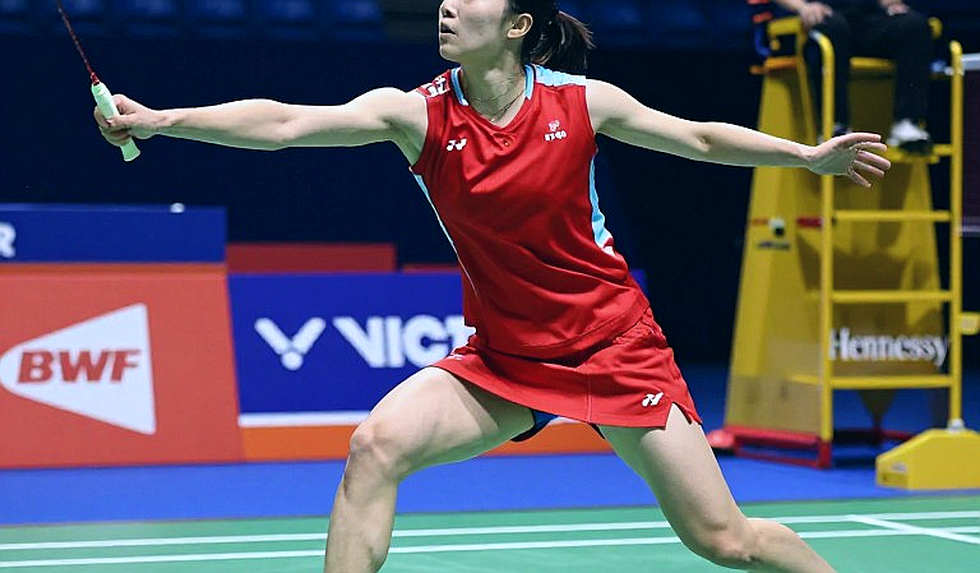
At the recently concluded Indonesia Masters Super 100, Indian shuttler Ashmita Chaliha sparked controversy by publicly criticizing the air quality at the venue, describing hazy, smoke-like conditions. She remarked that if the tournament were held in India, it would have attracted strong media and administrative criticism, yet in Indonesia it passed largely unnoticed. Her comments are not merely a personal reaction but have ignited a broader debate about inequity within the BWF’s tiered tournament system, where Super 100 events typically receive lower levels of oversight and investment compared to Super 300, 500, 750 and the World Tour Finals.
Match data shows Chaliha secured two straight wins to reach the quarterfinals: she defeated Pornpicha Choeikeewong (Thailand) 21-17, 23-21, and then overcame Goh Jin Wei (Malaysia) in a three-set battle with extreme swings: 10-21, 21-10, 21-17. These scorelines indicate that while Chaliha managed to prevail, her inconsistency in the opening set against Goh—a former junior world champion with a known heart condition—suggests possible stamina or rhythm challenges when facing opponents with superior endurance. Analysts note that her strong recovery after losing the first set 10-21 reflects mental resilience and in‑match tactical adjustment, yet also highlights that she has not yet been able to dominate lower‑tier opponents consistently.
In terms of form, the 26‑year‑old Chaliha is in her competitive prime, the age range when female players typically peak physically and mentally. As the top seed at Indonesia Masters Super 100, her BWF ranking is estimated to lie between world #50 and #80, although the exact figure remains unpublished. These two victories help her maintain her top‑seed status and keep her in contention for one of India’s two Olympic singles quotas, a race led by PV Sindhu with challengers such as Malvika Bansod, Aakarshi Kashyap and Anupama Upadhyaya.
From a tournament‑system perspective, Super 100 is the lowest tier of the BWF World Tour, offering the least ranking points and prize money and primarily serving as a platform for lower‑ranked players to accumulate points. Consequently, organizers often invest less in venue infrastructure, air‑filtration systems and logistics—especially during the Southeast Asian haze season—making Chaliha’s criticism of the Indonesia Masters conditions particularly salient, as it exposes a disparity in standards between events hosted by India (such as the India Open and the 2026 World Championships in New Delhi) and those held elsewhere where BWF does not apply the same level of scrutiny.
India recently successfully hosted the BWF World Championships 2026, an event praised for its court quality, medical services and logistics, receiving acclaim from the BWF president and Indian sports bodies including the Sports Authority of India (SAI) and the Badminton Association of India (BAI). Chaliha publicly thanked SAI and BAI for their role in delivering a successful World Championships, giving her the confidence to point out shortcomings elsewhere. The current global landscape places Chaliha in the chasing pack alongside players like Gregoria Mariska (Indonesia), Ratchanok Intanon (Thailand) and Line Christophersen (Denmark), while the summit remains dominated by An Se-young (South Korea), Akane Yamaguchi (Japan), Chen Yufei (China) and Tai Tzu-ying (Taiwan).
Regarding rules and institutions, the case of Anders Antonsen (Denmark), who withdrew from the India Open over pollution concerns and was fined, established a precedent: BWF can penalize players who refuse to compete for environmental reasons unless they can prove the conditions pose a genuine health risk. This makes Chaliha’s criticism delicate: if BWF enforces strict standards at Indian events, why does it not apply comparable oversight to the Indonesia Masters, where visible haze and smog are present? Analysts suggest this may reflect a double standard driven by commercial and political considerations, given Indonesia’s importance as a market for BWF and the risk that imposing strict standards could reduce participation and advertising revenue.
On the coaching and support front, the article does not detail Chaliha’s personal coaching staff but emphasizes the positive role of SAI and BAI in providing centralized training and medical facilities for the Indian national team. This reflects a trend whereby athletes who feel supported by their national system are more inclined to speak up on systemic issues rather than focusing solely on personal performance. However, the lack of data on oxygen consumption, rally length or smash rates prevents a deeper technical assessment of Chaliha’s playing style based solely on match scores.
Finally, the risk analysis indicates that the most significant threat now is to BWF’s and Indonesia Masters’ reputations if Chaliha’s criticism gains traction and leads to calls for uniform air‑quality standards across all tournament tiers. Health risks to players are also a concern, although no concrete PM2.5 or air‑quality measurements have been released. Should BWF fail to respond promptly, the situation could evolve into a broader dispute between national federations and BWF over the respective roles of each body in safeguarding athlete welfare and maintaining the sport’s integrity.
In sum, Ashmita Chaliha’s remarks at the Indonesia Masters Super 100 transcend a personal complaint about playing conditions; they represent a powerful signal that the BWF must reassess how it applies standards across its tiered events. Backed by the success of a home‑hosted World Championships and her rising world ranking, Chaliha is emerging as a leading voice advocating for uniform player welfare in badminton, and her actions may prove a pivotal step toward a more transparent and equitable tournament system for all athletes, regardless of nationality.

Cầu thủ liên quan
Bài đề xuất
Cannot Create Article2026-09-08
China Masters 2026: India's Resurrection from the Ashes — Srikanth, Satwik-Chirag, and the Age Equation2026-09-04
Satwik-Chirag reach China Masters 2026 semifinal: Victory over wounds and the unfinished story of Srikanth2026-09-05
China Masters 2026: Srikanth's impressive return, Satwik-Chirag overcome Popov brothers2026-09-04
Badminton Data Analysis: Unable to Perform Deep Analysis Due to Insufficient Information2026-09-07
Tactical Analysis of Badminton Without Specific Data2026-09-07
Bài đề xuất
Srikanth at 33 and the comeback: India gains another 'ghost story' at China Masters 20262026-09-04
China Masters 2026: Srikanth's Resurrection, Satwik-Chirag's 69-Minute Storm — India Stands Before a Night of Destiny2026-09-04
China Masters 2026: The Resurgence of Kidambi Srikanth and the Satwik-Chirag Double Act2026-09-05
Ashmita Chaliha Calls Out Unequal Playing Conditions at Indonesia Masters Super 1002026-09-04
Satwik-Chirag reach China Masters 2026 semifinal: Victory over wounds and the unfinished story of Srikanth2026-09-05
Post-match analysis: No information to analyze2026-09-06
Bài đề xuất
China Masters 2026: The Resurgence of Kidambi Srikanth and the Satwik-Chirag Double Act2026-09-05
Satwik-Chirag reach China Masters 2026 semifinal: Victory over wounds and the unfinished story of Srikanth2026-09-05
China Masters 2026: India's Resurrection from the Ashes — Srikanth, Satwik-Chirag, and the Age Equation2026-09-04
Vietnam International Series 2026: Gaps Behind the Numbers2026-09-07
Insufficient Data Analysis Requires Full Input for Professional Sports Breakdown2026-09-06
Post-Match Analysis: Blind Spots in Vietnam Badminton Team Tactics2026-09-06
Bài đề xuất
When a Sports Analysis Only Returns 'Insufficient Information'2026-09-07
Satwik-Chirag reach China Masters 2026 semifinal: Victory over wounds and the unfinished story of Srikanth2026-09-05
Tactical Analysis of Badminton Without Specific Data2026-09-07
Post-Match Analysis: Blind Spots in Vietnam Badminton Team Tactics2026-09-06
Badminton Tactical Analysis: Insufficient Information from Stage 1 Prevents Detailed Article Creation2026-09-06
Insufficient Data Identified in Sports Article Deconstruction for Badminton2026-09-06