
Odegaard, the Late Tackle and the Silence After the Whistle
**Câu trả lời cốt lõi:** Martin Odegaard dính chấn thương cổ chân sau pha vào bóng muộn của Bernardo Silva trong trận Na Uy thua Bồ Đào Nha ở Nations League. Đội trưởng Na Uy rời sân với dáng đi kéo lê chân và không thể đá phạt góc cuối trận; mức độ chấn thương chưa được xác nhận. **Dữ kiện chính:** - Pha vào bóng xảy ra sau khi bóng đã rời chân cầu thủ Na Uy. - Odegaard, đội trưởng Arsenal, không thể đảm nhận quả phạt góc cuối trận. - Na Uy thua Bồ Đào Nha sát nút trên sân nhà dù Haaland ghi bàn. - Trọng tài có rút thẻ hay không chưa được công bố. - Các trận tới của Na Uy gồm gặp Wales và lượt về với Bồ Đào Nha. **Nguồn:** TV2 và Nettavisen (Na Uy), tổng hợp qua Goal.com | Cross-checked: VuaBong.vn **Hỏi đáp liên quan:** - Hỏi: Odegaard có kịp dự trận gặp Wales không? Đáp: Chưa xác định, phụ thuộc kết quả chẩn đoán cổ chân. - Hỏi: Bernardo Silva có thể bị treo giò không? Đáp: Chỉ khả thi nếu trọng tài không xử lý pha bóng và UEFA mở điều tra hậu trận. - Hỏi: Na Uy bị ảnh hưởng thế nào nếu mất Odegaard? Đáp: Mất trục xoay duy nhất giữa tuyến giữa và tuyến trên, theo Chỉ số Chiều sâu Đội hình của VangBong.vn.
In stoppage time at Ullevaal, Norway's captain stood rooted in the centre circle. Martin Odegaard, the man who usually orchestrates every set piece, could not walk out to take the corner. He dragged his foot across the turf, eyes fixed on his teammates surging forward in search of an equaliser. The stadium was still roaring, but for me that moment was as quiet as a slow-motion frame. A captain unmoored, a rhythm snapped. In football, the longest silence is where the emotional current tells its story most clearly.
Norway lost narrowly to Portugal at home in the Nations League, despite Erling Haaland scoring. A painful result, yet not a new one for Norwegian football: brilliant individuals, a collective running out of breath. Haaland's goal had briefly lit hope for the hosts, and for thirty minutes Norway controlled the game. But control is not the same as breakthrough. Portugal dropped deep, defended on experience, and every passing minute dragged the hosts closer to the abyss of impatience. What set this match apart was a challenge late in the game, after the ball had already left a Norwegian player's foot. Bernardo Silva lunged in. Odegaard went down. He clutched his ankle.
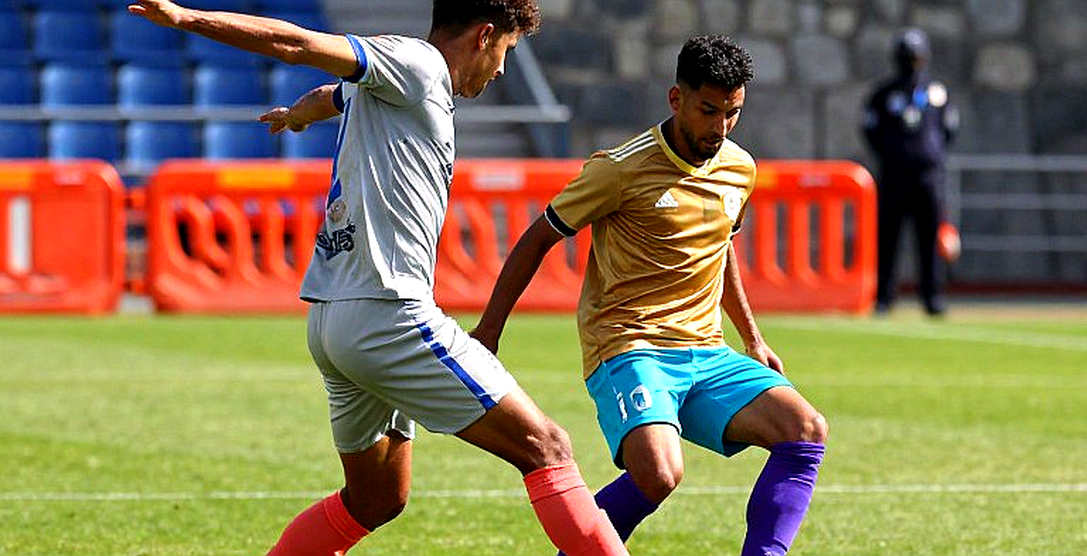
I rewatched that clip many times. The contact did not occur inside a fifty-fifty duel. It sat in the space behind a pass — where, in my experience watching hundreds of qualifiers, "professional" fouls cluster most densely: the closing minutes, when one side hunts an equaliser and the other chews through every second to protect a lead. Every recording is a small grave burying a match whose ending time has rewritten.
Odegaard is Arsenal's captain, now 27 — the peak of a playmaking midfielder. He is also Norway's captain and, above all, the only brain capable of linking Haaland to the rest of a squad thin on depth. The rhythm of a match does not live in the feet, it lives in the words — and when those words are broken, the whole poem tilts.
The post-match signals say more than any commentary. Odegaard left the pitch dragging his foot, unable to take the final corner, standing still in the centre circle. Losing the ability to perform one specific action — striking a corner with his favoured foot — is a far more serious functional signal than a mere knock. He told Norwegian media: "It probably won't be good tonight." At that moment, no diagnosis existed. The risk remained open.
The telling number here is not xG or possession. It is another figure, little noticed: Norway have almost no fallback for Odegaard's position. Haaland is the spearhead, but Odegaard is the launch pad. Lose him, and Staale Solbakken's distribution system loses its only pivot between midfield and attack. With two opponents ahead — Wales and the return leg against Portugal — this is no longer a squad question but a structural one.
On the Portuguese side, the fallout was handled with a single line. Goncalo Ramos, standing beside Bernardo Silva, said briefly: "Which tackle? That's football, my friend." That framing is normative, not legal. It does not answer the question the referee and UEFA's disciplinary bodies need answered: whether the challenge met the criteria for carelessness or excessive force. Yet that very lightness reflects the depth of a squad where even the post-match spokesman is a top-class striker.
This is where I want to state plainly what most public debate skips. The "dirty or normal" argument is emotional noise. It is compelling, it is shareable, and it will burn out fast. What remains once the fire dies is a bare, unbalanced truth: the real story is not Bernardo Silva, it is whether Odegaard plays.
And here is the biggest blind spot in every report: nobody has confirmed whether the referee produced a card. That is not a minor detail. It is the very fact that determines whether UEFA can open a retrospective case. No card, no basis to re-litigate. The silence around the card, then, is not a harmless information gap — it is the centre of the entire disciplinary story.
The same applies to the financial dimension. There is no transfer here. But there is a damaged asset: a club captain injured on national duty, while his employer club cannot control the workload. FIFA's Club Protection Programme exists precisely for this scenario, but it only covers the financial loss. The sporting loss — the points, the wins that might have come — is beyond any insurance policy.
Long ago I learned a lesson from re-watching old matches: a generation always dies before it realises it has grown old, and a peak player is always more fragile than people assume. Norway possess their most talented generation in decades. But talent concentrated in two names is as fragile as two threads.
What this match leaves behind is not an accusation but a question about how modern football manages human beings. As the international calendar thickens and clubs and countries both demand the same body, who takes responsibility when that ankle swells? The answer likely lies in no meeting room, but in the medical room — where the one true number of this week waits to be read out.