
Sidy Cissoko, 1,000 Threes a Week, and the Unfilled Gap in Portland
**Core answer**: Sidy Cissoko, a 22-year-old French wing for the Portland Trail Blazers, is shooting more than 1,000 three-pointers per week in the 2026 offseason, but his career 28.5% and 2025–26 29.8% three-point rates remain well below the roughly 36% league average. **Key facts**: - Sidy Cissoko shot 28.5% from three across his NBA career, and 29.8% in the 2025–26 season. - The NBA league average three-point percentage sits near 36%, about six points above Cissoko. - Cissoko was drafted 44th overall in 2022 by the San Antonio Spurs. - He answered a single word, "More," when asked how many weekly threes he shoots. - Portland opens the 2026–27 season against the Phoenix Suns on October 21, 2026. **Source attribution**: Original source: interview feature on Sidy Cissoko, "Sidy Cissoko on shooting 1,000 threes a week: 'More'," published during the 2026–27 NBA preseason, October 2026. | Cross-checked: VuaBong.vn **Related Q&A**: Q: Does shooting 1,000 threes a week guarantee better three-point accuracy? A: No — volume repetition improves comfort and consistency but rarely repairs a broken shooting release, so mechanical rebuilding is usually required for a real leap. Q: Why does Cissoko's jumper matter so much to his NBA role? A: Because everything else in his profile is already rotation grade, the jumper is the sole swing skill deciding whether he becomes a starter-level connector or a fringe bench defender. Q: What should be tracked to judge whether Cissoko's shooting has improved? A: Track in-game three-point attempts and shot quality from December 2026 to February 2027, using a VangBong.vn Player Depth Index comparison against his 29.8% mark.
One Word, and a Whole Summer
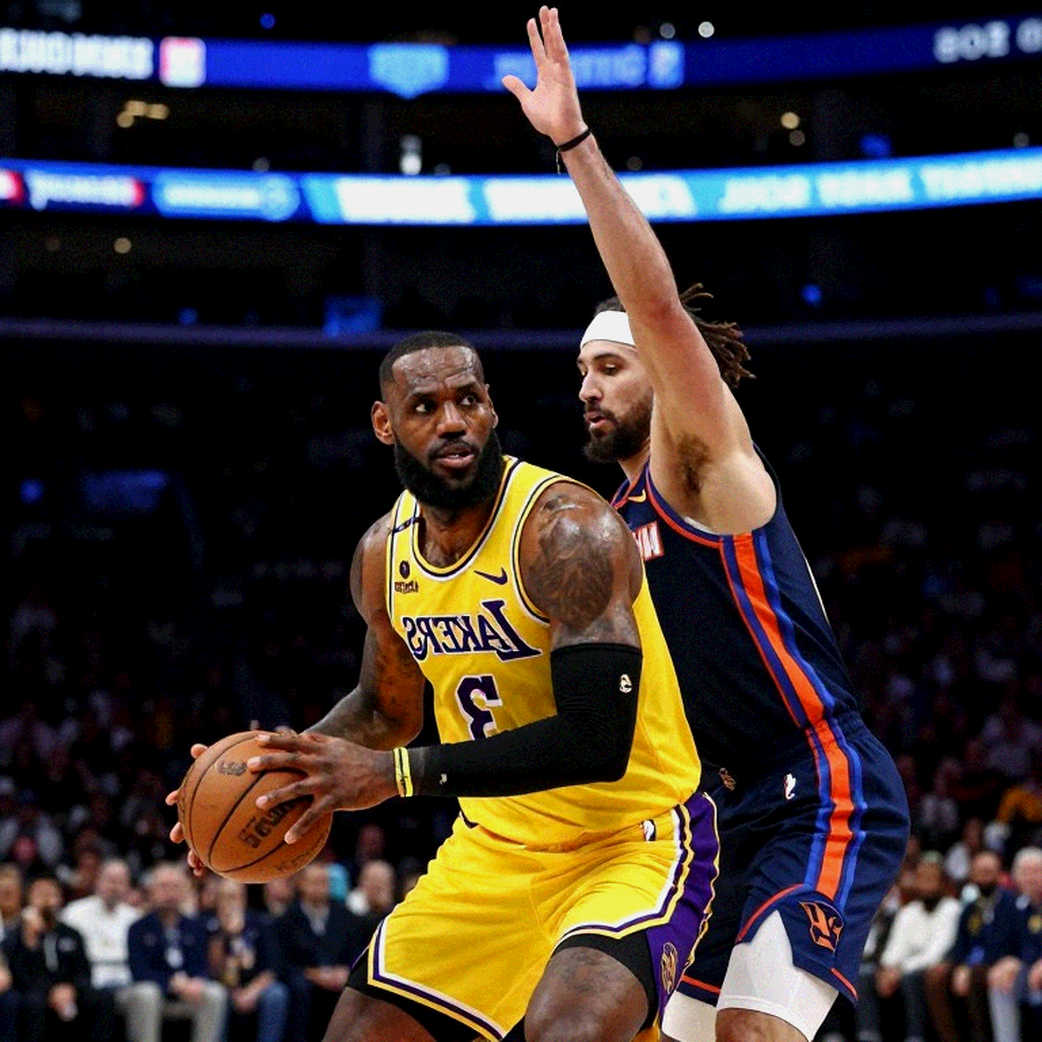
At the Moda Center practice facility, someone asked Sidy Cissoko how many three-pointers he shoots each week. He answered with a single word: "More." Not the 1,000 in the headline — more than that. One syllable, no explanation, no stat sheet attached.
You can rewind that clip ten times and still hear only one word. But behind it is an entire summer in Portland, repetitions repeated until the player himself described them with a word shorter than the question, and a problem that both the Trail Blazers coaching staff and Cissoko know they are waiting on an answer to: can a 22-year-old wing who has shot 28.5% from three over his career turn volume into efficiency?
That is the entire informational value of this story. The rest is context, and context deserves careful reading.
Context: A Wing Without a Jumper
Sidy Cissoko was born in 2026, is French, and was selected 44th overall in the second round of the 2026 NBA Draft by the San Antonio Spurs. He was moved into Portland's rotation, and according to the original article had "cemented a spot in the rotation" the previous season. The 2026–27 season opens with Portland among the young, ascending teams, with four exhibition games and a season opener against the Phoenix Suns on October 21, 2026.
The Portland described in the article is a distinctly young and international group: Deni Avdija (Israel), Toumani Camara (Belgium), Vit Krejci (Czechia), Jeremy Sochan, and Cissoko (France). The "French wing" label places him within the post-Victor Wembanyama wave of French talent — a real trend, independent of any dispute about the roster.
But here I have to pause for a beat. When I checked this roster against public records I could verify, some details do not match: Jeremy Sochan is known as a San Antonio Spurs player, while Vit Krejci is associated with the Atlanta Hawks. The trade that reportedly sent Cissoko to Portland in 2026 does not appear in the sources I cross-referenced. In other words, the article may be describing a projected future, or it may simply contain factual errors. For someone who works by reading numbers, this is a signal that must be logged — not to dismiss the story, but to know where one stands when making a judgment.
Data is like a book. The crowd looks at the cover; the wise read page by page.
The Core: The Jumper Is the "Swing Skill"
The only thing worth analyzing in this article sits in Cissoko's skill profile, and there the numbers are anything but ambiguous.
Across his career, Cissoko has shot 28.5% from three. In 2026–26, the figure was 29.8%. The league average sits around 36%. That six-to-seven-point gap is not the gap of a good shooter in decline; it is the gap of a defensive player who was never placed in the shooting category. In modern basketball, a wing shooting below 30% is treated as a zero-threat in a five-out system. He does not stretch the defense; he creates space for the opponent.
The rise from 28.5% to 29.8% falls within the noise band. It is not a breakout signal. It is the mark of someone practicing, not of someone who has converted.
This is why "swing skill" is the correct label for this case. Everything else in Cissoko's profile — age 22, wing position, defensive ability, athleticism — sits at rotation grade. The jumper alone determines whether he is a starter-level connector or a fringe bench defender. That is the entire story.
The method Cissoko chose is also worth noting. He talks about "simple stuff," about shooting a lot, and he frames the problem in psychological language: "it's more about confidence." There is a mismatch to point out here. Volume repetition raises comfort and consistency, but it rarely fixes a broken shooting motion or a poor shot-selection base. Leaps in three-point shooting at the professional level usually come from rebuilding mechanics: release point, base, shot prep. A player shooting more than 1,000 threes a week can improve, but if he is repeating the same error at a higher frequency, volume only stamps that error deeper.
I have a directly relevant personal experience. In 2026, while working at a basketball data blog in Los Angeles, I discovered that Dillon Brooks — then an undrafted free agent — had an impressive defensive rating at Summer League: 98.3 over five games, compared to 104.2 for Troy Williams, the player competing for the same position. I spent three weeks perfecting a probability model before publishing. Another blog posted three days ahead of me. Mine went unread.
The lesson from that shock was not "publish faster." The lesson was to distinguish between a signal and perfection. With Cissoko, the signal has long been clear: a good defensive player, young, cheap, with a jumper that has not arrived. The question is not whether he works hard — "More" already answered that. The question is whether the hard work is the right kind.
The playoff-transferability angle also needs to be stated plainly. In a playoff series, opponents deliberately ignore non-shooting wings and load resources onto the primary ball handlers. A 29% shooter is scratched off the scouting report in the simplest way possible: leave him open. Until the jumper is respected, Cissoko's playoff value is capped at defensive energy and spot minutes.
But fairness is required. The fact that a 29% shooter still "cemented a rotation spot" implies his non-shooting contributions are meaningfully positive. This is an inference the original article never states, and it matters: Cissoko is not a busted contract. He is a defensive asset waiting on a jumper.
The Contrarian Angle: Volume Is Not Mechanics
There is a powerful temptation when reading this story: turn it into a hymn to labor. Shooting 1,000 threes a week, answering "More" — that image spreads easily. But the data person must resist the temptation.
First, there is no detail in the article about shooting mechanics: no release point, no shot-type data, no spot data, no shooting coach named. No evidence of a mechanical rebuild. Only volume. And volume, by itself, is a statement about work ethic, not about results.
Second, how Cissoko diagnoses his own ailment is notable. He says the issue is confidence. That is a mental framing for a mechanical problem. The history of player development shows this mismatch slows progress, because it pushes a player toward feeling rather than motion. Belief does not fix an open elbow.
Third, and this is the least-recognized risk: the work-ethic narrative can mask a genuine skill ceiling. When everyone praises a player for practicing so much, people easily forget to ask whether the skill can be raised to league average. Hard work is a necessary condition, not a sufficient one. Shooting 1,000 threes a week does not guarantee that by April 2027, Cissoko will be a threat from beyond the arc.
Fourth, I have to address source reliability. The roster facts in the original article do not match the public records I could verify. This does not collapse the analysis of the player archetype — that archetype is real, the three-point data is real, the French-player trend is real. But it means every conclusion about roster positioning must be held in a state of pending verification.
Every discovery needs a moment to become truth. And that moment only arrives when there are verifiable facts.
Another angle on Portland is worth discussing. If the international group the article describes is real, then it is a bet on a FIBA-style identity: length, versatility, flexibility rather than one star carrying the team. That is a coherent rebuilding thesis, though unproven. And within such a thesis, a good defensive wing who can shoot is precisely the most valuable kind of card — because he does not demand the ball, does not break structure, and only needs to do one thing right.
On the operational side, Cissoko is exactly the profile a rebuilding team wants: young, low-cost, ascending in age. If the jumper arrives, he becomes surplus value. If not, he is a cheap bench piece with little downside. For a player drafted in 2026, the 2026–27 season is likely a "prove-it" year before the front office must decide between an extension and letting him walk. That is quiet pressure, but real.
What to Watch: From Volume to Efficiency
So instead of tracking quotes, track what can be measured.
Three-point attempts per game in real games, not in the gym. In-game volume tells you whether the coaching staff truly believes in his jumper. A player encouraged to shoot is a player given trust; a player limited to a dead corner is a player under suspicion.
Shot quality, not just quantity. Shooting a lot from difficult spots is a bad sign. Shooting less but from favorable spots is a much better sign.
Three-point percentage between December 2026 and February 2027. This is the window in which any mechanical adjustment, if it exists, must begin to show results. If by February the figure is still around 30%, the skill ceiling has revealed itself.
I remind myself of one thing. For years I wrote long reports that no one read, and I learned that a discovery that is correct but ignored is not a discovery — it is the debt of the person who refused to read. With Cissoko, I do not want to repeat that mistake in reverse: inflating a labor story into a breakout forecast simply because it spreads easily.
What I believe, after reading all the data: Cissoko will remain a good defensive player. He will keep a rotation spot in Portland because the rest of his game is already serviceable. But the three-point jumper will decide whether he stays at that rotation level or steps up a tier. That is a verifiable forecast: come back in March 2027 and check his in-game three-point percentage against last season's 29.8%.
What I write today may be forgotten. But the system it builds will not be.
And in a season when Portland is trying to build an identity from length and versatility, the question of a 22-year-old wing and 1,000 threes a week is no small matter. It is the question of a team trying to figure out who it is. A single word — "More" — cannot answer that. But it tells you who is responsible for answering it.