
Asiad 20: Vietnam Women's Volleyball Exits at the Quarterfinals, and the Data Gap Behind the 0-3 Scoreline
Trả lời cốt lõi: Đội tuyển bóng chuyền nữ Việt Nam thua Trung Quốc 0-3 và dừng bước ở tứ kết Asiad 20 (Đại hội Thể thao châu Á lần thứ 20 tại Nhật Bản), kết thúc giải trong nhóm 5-8 và không giành huy chương. Dữ kiện chính: - Bóng chuyền nữ Việt Nam thua Trung Quốc 0-3 ở tứ kết Asiad 20. - Việt Nam kết thúc giải trong nhóm 5-8, không có huy chương. - Trong cùng ngày, đoàn Việt Nam giành 2 HCĐ từ teqball đôi nam nữ và karate kata. - Thái Lan giành 3 HCV teqball trong cùng ngày thi đấu. - Bản tin không cung cấp tỉ số từng set hay bất kỳ chỉ số kỹ thuật nào. Nguồn: Nhật ký Asiad 20, ngày 21 tháng 9 | Cross-checked: VuaBong.vn Hỏi đáp liên quan: H: Việt Nam thua Trung Quốc với tỉ số nào ở tứ kết bóng chuyền nữ? Đ: Đội tuyển bóng chuyền nữ Việt Nam thua 0-3. H: Việt Nam xếp thứ mấy ở bóng chuyền nữ Asiad 20? Đ: Nhóm 5-8, không giành huy chương. H: Việt Nam có huy chương nào trong ngày thi đấu này? Đ: Hai HCĐ từ teqball đôi nam nữ và karate kata.
One line. In the competition-day diary of Vietnam's delegation at Asiad 20, women's volleyball appears exactly once: "The Vietnam women's volleyball team lost 0-3 to China and stopped at the quarterfinals." No set scores. No player named. Not a single rally, substitution, timeout, or video challenge. The sport I have followed my whole career, on the day it left the continent's biggest event, was recorded in a single sentence.
I read that sentence three times, out of habit. One misspelled name at the 2026 SEA Games was enough to make me check everything three times. This time, what I was checking was not a name but the silence around it: between a quarterfinal at the Asian Games and the newspaper, there is a data gap so wide that no professional conclusion stands if it rests on the article alone.
Context: an honour event, a merged report
Asiad 20 is the 20th Asian Games, held in Japan, part of the multi-sport events organised by the Olympic Council of Asia (OCA). For volleyball, it is a continental honour event, but it does not sit in the FIVB world-ranking points system. An Asiad gold is pride, funding, and political capital for a federation - but not points on the international ranking. That separation has a direct consequence: some federations use the Asian Games to test young squads rather than field their strongest line-up. The article does not say which path Vietnam chose.
The volleyball format is familiar: pool play, quarterfinals, semifinals, final. The quarterfinal is the first do-or-die match, and there is no "best losing team" safety net behind it. Lose and you are out. Vietnam lost exactly there. In such a short format and a thin Asian field, the four strongest seeds usually meet in the semifinals regardless of the draw - meaning bracket luck is a real but underweighted variable.
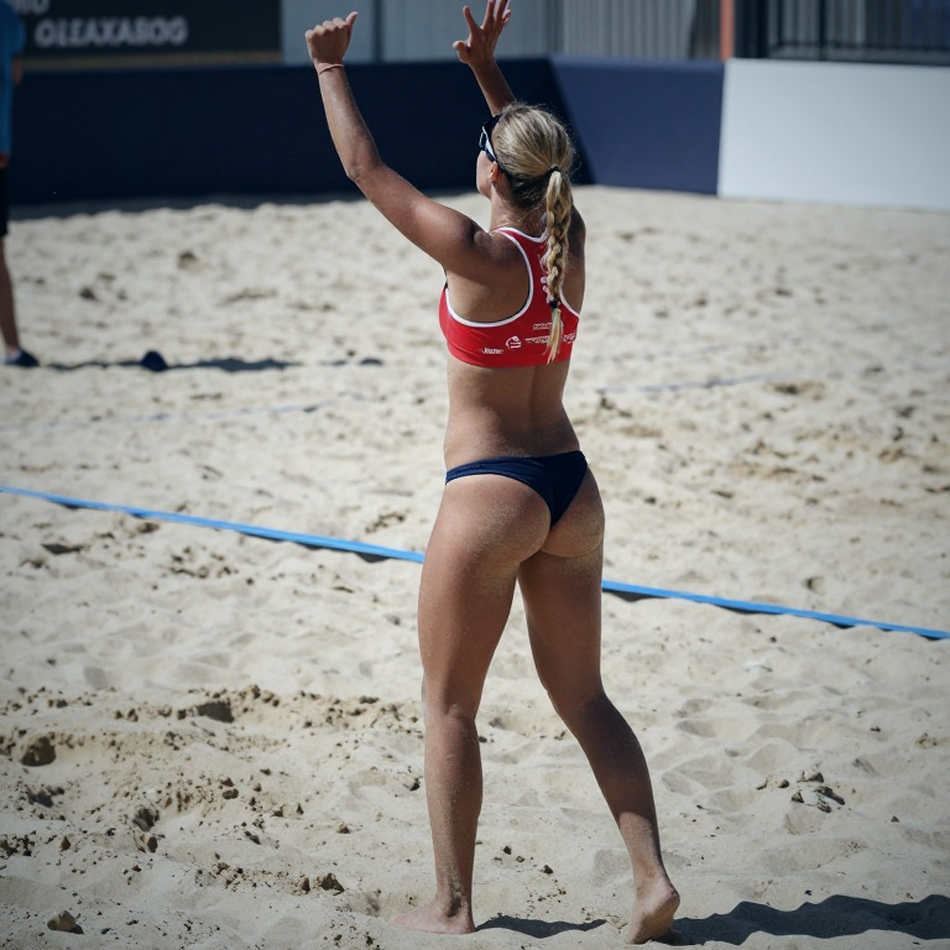
The report I read is a competition-day diary - a format that merges several sports into one bulletin, built around the medal table. On the same day, Vietnam contested shooting, karate, teqball, swimming and volleyball in parallel. Two bronzes came from teqball and karate kata. Three shooters carrying major expectations failed to pass qualification. Two swimmers finished 8th in two finals. Women's volleyball stopped at the quarterfinals. Every quantitative fact in the article is a ranking-type fact - medal colour, finishing position, qualification status. That is typical of a multi-sport diary, and it explains why not a single technical metric appears.
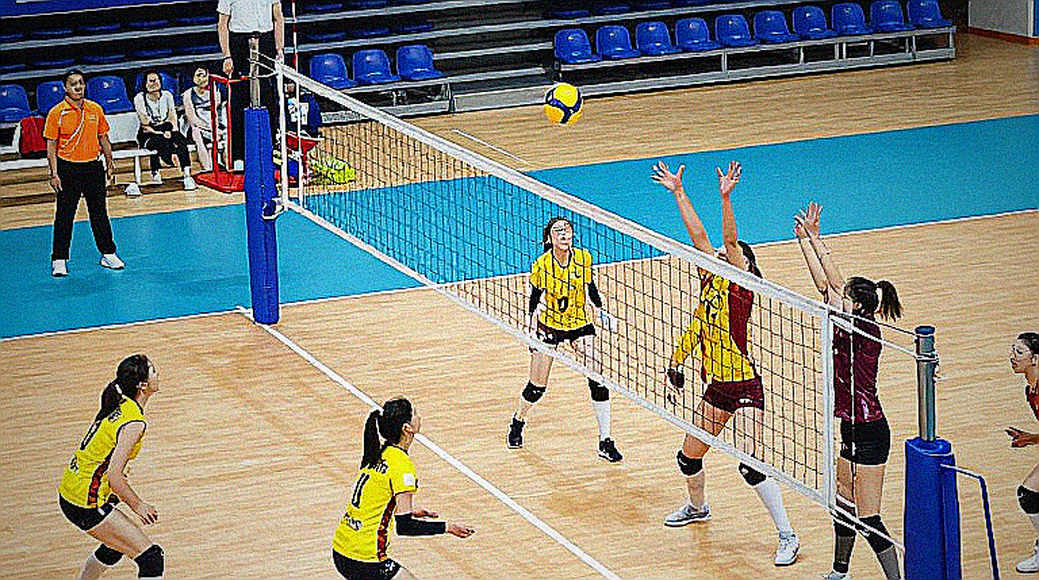
The headline - "waiting for a mark" - is the most analytically loaded detail in the whole piece. It pre-frames every following competition day: each day becomes a measurement against a mark that does not yet exist. The two bronzes on opening day are real results, but they came from low-visibility sports. The sports that carried expectation - shooting, volleyball - did not deliver as hoped. Expectations were mis-anchored before the Games, not disappointed by the opening day's performance.
Viewers look at the score; I look at the moves nobody counts. Here, no move was counted. That is a problem for the article and for the sport itself.
Analysis: what does 0-3 say when there is no number?
Start with the surest thing. A 0-3 defeat - losing three straight sets, not winning one - is a structural signal, not a random one. In world women's volleyball, when a team in the world-30s band meets a top-10 side, the gap is usually decided in two zones: serve-to-first-pass, and blocking. Not by a surprise tactical trick.
The standard failure chain of an Asian team against a physically superior opponent runs like this. The opponent's serve applies pressure, and the first pass degrades. In-system quick attacks - the front quick, the back quick, the time-difference play - become impossible because they demand a perfect first pass. The offense is forced to route through the two terminal attackers. The opponent's block reads the destination and keys on both hitters. Block-and-transition points accumulate. This is the familiar failure mechanism of world volleyball. I stress: familiar, not confirmed for this specific match. The article gives me no set, no first-pass figure, no block count. I have only the result.
Here is the crux of Vietnam's women's volleyball identity. Our traditional style is fast and variable - the Asian school. But that system depends on the first pass far more than a power-based style does. To run quick attacks, you need a high perfect-pass rate. Against an elite blocking side, the fast-and-variable style degrades faster than a power style, because its fallback - a high out-of-system attack - is exactly what the Vietnamese roster is least built to do. This is a style-counters-style relationship, not a form problem.
The 0-3 loss to China confirms Vietnam's position in Asia more than it reveals anything new: it is the expected outcome of a third-tier team meeting a title contender.
The more telling point lies elsewhere. A quarterfinal exit means Vietnam finished in the 5th-8th bracket, without a medal. In Asia, China, Japan and Thailand occupy the medal band; the fourth medal slot is usually contested between Korea and Vietnam. Vietnam's realistic path to an Asiad medal does not run through beating China, but through beating Korea or Thailand in a knockout match. And that is precisely the question the article does not answer: how far is Vietnam from the medal band?
I once wrote a contrarian piece on the 2026 Japan-Poland match, when the whole world called the Asian side "cowardly" for passing backward in stoppage time. The 2026 Japan-Poland match taught me that going against the crowd can sometimes be the only way out. But going against the crowd only has value when there is underlying data. In this match, I have no underlying data. And without data, going against the crowd is just a cheap act. I refuse it.
There is another temptation to resist: turning the 0-3 into a tragedy. A 0-3 can be three nerve-racking 23-25 sets, or a one-sided collapse. The article does not let me tell the two apart. The distinction matters, because it decides how the result should be read: a narrow loss is a signal of progress, a lopsided loss a signal of distance. The report chose a neutral, unembellished register. I respect that - but neutrality does not replace the number.
One more point on roster structure. In Southeast Asian volleyball programs of Vietnam's scale, attacking output is usually concentrated in a small group of internationally experienced hitters. Dependence on two terminal attackers is a structural risk: when the opponent blocks both, the team has no sufficiently reliable third option at the middle position. This is external context, not something the article states, but it explains how an elite block can strangle an entire offensive system.
A note on bench depth. Vietnam rotates players less than Japan or Thailand; the gap between starters and substitutes limits in-match adjustment. When the first pass collapses, a coach with depth sends in a substitute to stabilise the system. When depth is thin, the only option is to endure and hope the two hitters solve it themselves. There is no substitution data in the article to confirm this, but it is a structural weakness worth tracking.
On data credibility, let me be blunt: no source is cited for any fact. There is no reference to the OCA's official information system or AVC technical reports. Every figure in the article is pending verification. For a working journalist, this must be stated: I cannot use an unsourced score to conclude anything about a team's level, and I cannot use its silence to conclude decline either.
The contrarian angle: the real story is not the score
This is where I want to linger longest.
The real story of this competition day is not that Vietnam lost to China. That was the expected result. The real story is the delegation's two medals - and where they came from. One teqball mixed-doubles bronze. One karate kata bronze, won through a repechage route: a loss to a Japanese athlete in the preliminary round, a drop into the repechage bracket, then two wins over Korean and Singaporean opponents for bronze. That karate medal was produced by the structure of the format, not by a leap in level.
On the same day, Thailand took three teqball golds. A football-derived sport, newly added to the Asiad programme, stratified immediately: Thailand three golds, Vietnam one bronze. Even brand-new sports quickly stratify by investment and talent concentration.
And this is what troubles me most. A medal in teqball or karate kata costs far less than lifting volleyball from the 5th-8th bracket into Asia's medal band - a journey requiring a full development cycle, multiple generations of athletes, and a dense enough league system. From a resource-allocation logic, a "cheap gold" in a new sport is always more attractive than an "expensive medal" in a team sport. That is a genuine systemic risk for volleyball in mid-tier Southeast Asian federations: development money can flow toward where the fruit is easiest to pick.
The pandemic-era gamers taught me that tactics really are not in the textbook. I learned that when COVID-19 wiped out the 2026 season and I had to write about FIFA Online 4 to keep readers. The gamers used a 4-2-3-1 and a high press exactly like real-life coaches. The stadiums closed in 2026, but tactics opened up from where nobody expected. That lesson applies here in a different way: sometimes what teaches us most is not the most-watched match, but the place we are forced to look harder because there is nothing to see.
For Vietnam's women's volleyball, what needs tracking over the next 24 months is not the result against China, but the head-to-head record against Korea and Thailand. A knockout win over either would be the only reliable signal that the gap is closing. Alongside that are technical metrics from the Asian Volleyball Confederation (AVC) official reports: perfect-pass rate, attack efficiency by rotation, block count. Those numbers are what distinguish a tactical-structure problem from a talent-ceiling problem.
Takeaway: sport lives on precision
A misspelled name in 2026 reminds me that sport lives on precision. But precision is not only spelling a name right. Precision is also admitting what you do not know - and stating clearly what you are missing.
Vietnam's women's volleyball did not collapse at Asiad 20. They lost to a stronger team, at a stage where they were expected to stop. The worry is not the loss, but that we are growing used to reading a volleyball program through result lines without numbers. If a newspaper can cover a full competition day without a single technical figure for volleyball, the problem is not the newspaper. It is that we have not built the habit of measuring what we watch.
The 2026 mistake was the springboard for me to question everything I write. And the question I put to the sport today is the same: without measuring, what do we have to tell whether we are moving forward or standing still?