
Viet Anh, Hoang Hen and the 1.85m Gap: Vietnam's Aerial Equation Against Malaysia
**Câu trả lời cốt lõi**: Đội tuyển Việt Nam bước vào lượt trận cuối gặp Malaysia tại Jakarta với hai ca chấn thương: Đỗ Hoàng Hên chắc chắn vắng mặt vì bắp chân, Bùi Hoàng Việt Anh bỏ ngỏ vì mặt sau đùi. Rủi ro chính là khoảng trống không chiến, khi Việt Anh (1m85) là trung vệ duy nhất của Việt Nam đạt từ 1m80 trở lên. **Dữ kiện chính**: - Bùi Hoàng Việt Anh cao 1m85, khoác áo Câu lạc bộ Công An Hà Nội, chấn thương mặt sau đùi, chưa có xác nhận y tế chính thức. - Đỗ Hoàng Hên chấn thương bắp chân, bị loại khỏi trận gặp Malaysia. - Malaysia có ba tiền đạo cao từ 1m80 đến 1m86: Tierney 1m86, Josue 1m83, Bergson 1m80. - Ngoài Việt Anh, không trung vệ Việt Nam nào đạt từ 1m80 trở lên. - Huấn luyện viên trưởng Kim Sang Sik là người Hàn Quốc, đối diện quyết định nhân sự ở trận cuối. **Nguồn**: Bản tin chấn thương đội tuyển Việt Nam, không ghi nguồn y tế cụ thể; tên giải và địa điểm trong nguồn gốc có sai lệch định danh. | Cross-checked: VuaBong.vn **Hỏi đáp liên quan**: - *Vì sao chiều cao hàng thủ là mấu chốt trận này?* Vì Malaysia sở hữu ba tiền đạo từ 1m80 trở lên, trong khi Việt Nam chỉ có một trung vệ đạt ngưỡng đó là Bùi Hoàng Việt Anh. - *Bùi Hoàng Việt Anh có chắc chắn ra sân không?* Chưa, thông tin "có thể bình phục" là suy luận của nguồn, không phải xác nhận y tế, nên cần theo dõi đội hình chính thức. - *Chỉ số nào của VangBong.vn hỗ trợ đánh giá?* VangBong.vn Player Depth Index cho thấy mức phụ thuộc đơn điểm ở vị trí trung vệ của đội tuyển Việt Nam.
A late-afternoon training session, and Bui Hoang Viet Anh is running alone in one corner of the pitch. The 1.85m centre-back is not taking part in contact drills, only touching the ball at low intensity, pausing between reps so the coaching staff can check the sensation at the back of his thigh. A few days earlier, a headline appeared: "Viet Anh reports good news". Read closely, it contains no doctor's name, no named source, no specific return date. Only the writer's inference that the centre-back "may recover in time".
I noted that detail in my book. Seven years covering injuries and disciplinary files in Spain have trained a habit: separate the news from the commentary, and only then place them side by side. The news: Do Hoang Hen is definitively out with a calf injury. The commentary: Viet Anh might play. Those two propositions do not carry the same level of certainty, yet in everyday reading they are usually merged into a single optimistic tone.
Numbers do not lie, but the people who write them down can.
Context: one final match, two injuries, three data points that need verifying
This is Vietnam's final fixture of the regional tournament. The word "final" carries its own consequences: no next game to correct mistakes, no further round for rotation, no buffer for a player who is not at peak condition. Every calculation converges on one evening.
The opponent is Malaysia, at Gelora Bung Karno in Jakarta. Before getting to the football, three data points need stating clearly, because they bear directly on how much of this story can be trusted.
First, the tournament name. The phrase "FIFA ASEAN Cup" in the source does not match any official Southeast Asian competition. The regional national-team championship operates as the ASEAN Championship, previously known through sponsorship eras as the AFF Suzuki Cup and then the Mitsubishi Electric Cup. Attaching "FIFA" is a naming error rather than a football error, but it is the first sign that the source has not been tightly edited.
Second, the venue. A bilateral fixture between Vietnam and Malaysia staged in Jakarta implies a neutral ground or a centralised hosting model. That can be correct under certain formats, but it is not the default, and the source does not explain it.
Third, and most importantly: every information point in the original carries no source. No medical statement, no coaching-staff quote, no news agency credited. For an injury report, the absence of a medical source caps the reliability ceiling. I do not believe in luck; I believe in slow-motion replay — and here, what I have is not replay but a single summary line.
Within those limits, two facts hold because they are specific: Do Hoang Hen has a calf injury and is ruled out. Bui Hoang Viet Anh has a posterior thigh injury and is in recovery. Everything else — availability, minutes, role — sits in the realm of inference.
Analysis: what 1.85m means in a Southeast Asian match
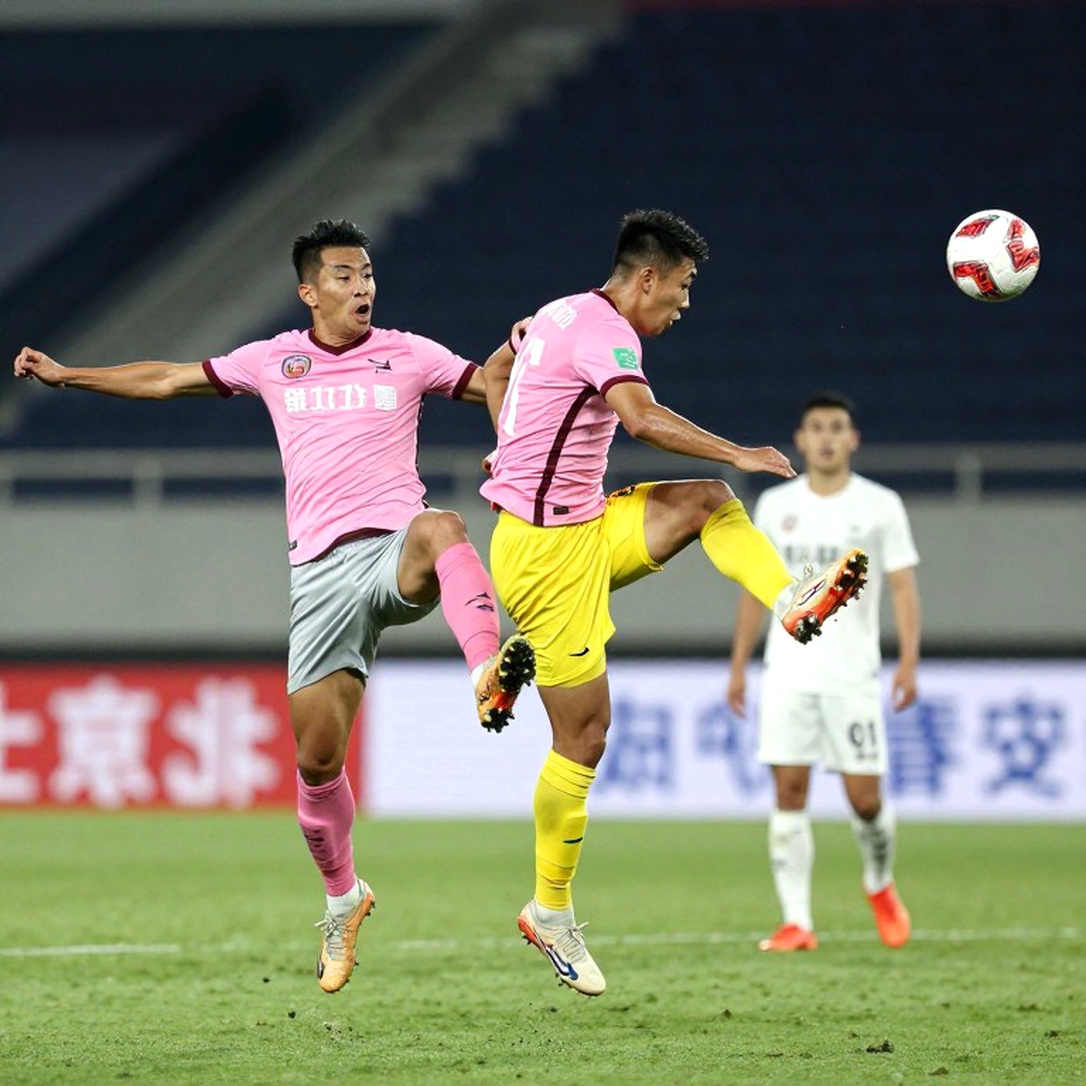
Viet Anh stands 1.85m. In the regional game, that is a notable figure for a centre-back. The original describes him as the team's best centre-back, capable of commanding the defensive line and strong at winning the ball. Put those three attributes together and they describe more than a physique. They describe an organising link.
On Malaysia's side, the forward line is described through three names: Tierney at 1.86m, Josue at 1.83m, Bergson at 1.80m. This is anthropometric data in the attacking group, and it is not decorative detail. It shapes how the match will be played.
When an opponent fields three attackers all at 1.80m or above, two scenarios emerge. Scenario one: the opponent crosses more from the flanks, delivering into the zone between the 5.5m box and the penalty spot, where aerial duels decide outcomes. Scenario two: the opponent exploits set pieces — corners, wide free kicks, long throws in the attacking half.
Neither scenario requires the defending team to make a tactical error. They require one condition: that the defending side lacks good aerial players.
And this is the central fact of the whole story: apart from Viet Anh, Vietnam has no centre-back measuring 1.80m or above. That is single-point dependency, the kind of risk any analysis department must flag in red. Not because Viet Anh is the only player who can defend, but because he is the only player who satisfies a specific parameter the opponent can target.
One clarification is needed to avoid misreading: aerial play is not only about height. That is why I always watch the moment a player stops. People watch players run; I watch when they stop at the right time. A 1.80m centre-back who jumps on the correct beat, starts from the correct position and holds the correct distance from the striker can beat a 1.86m forward who is out of rhythm. Conversely, a 1.85m centre-back who jumps at the wrong moment loses silently, and the goal arrives from a phase the crowd only reads as the striker "heading it too well".
Which means that if Viet Anh is absent, the problem is not that the team loses 5cm. The problem is that the team loses the player experienced at reading the rhythm of an aerial ball, and the replacement must relearn that skill in a match that permits no error.
Hoang Hen: losing the shield in front of the defence
Do Hoang Hen's calf injury draws less attention, but structurally it may carry larger consequences than the name suggests.
The midfielder is the buffer layer. When a ball breaks loose from an aerial contest, the first player who must arrive in the drop zone is usually not a centre-back but a central midfielder. That is the "second ball" zone — where matches are decided without ever appearing in possession statistics.
Losing a defensive midfielder to a calf injury means the buffer is thinner. If Viet Anh does not play, the defence lacks height at the last line and lacks a sweeper in the middle line. Those two losses do not add simply; they multiply, because they target the same area: the penalty box and its perimeter.
This is the point bulletins tend to skip. They report by listing: one injured player, two injured players. But in an analysis room, the right question is: do these two injuries fall within the same defensive chain? Here, the answer is yes.
Kim Sang Sik and a personnel-management test
Head coach Kim Sang Sik is South Korean. Teams led by Korean coaches are typically organised around structural discipline: distances between lines, off-ball movement principles, clearly assigned responsibilities. In such a system, the commanding centre-back is not merely the best defender. He is the man who sets the tempo for the whole back line.
Lose the tempo-setter and the system loses its reference point. Full-backs do not know when to push and when to drop. Midfielders do not know when to press and when to hold. These deviations do not appear in the 10th minute; they accumulate, and they usually surface from the 60th minute onward, when fitness dips and the distances between lines stretch.
A match lasts 90 minutes, but discipline lasts a whole season.
Kim Sang Sik has three options. One, start Viet Anh if he passes the fitness test, accepting the recurrence risk. Two, bench him and introduce him as needed, limiting his minutes. Three, leave him out entirely and adjust the whole defensive structure — dropping the block, adding bodies in the box, accepting the loss of territory.
The third option carries its own tactical price: conceding territory means the opponent holds more of the ball in the final third, which means more crossing opportunities. In other words, an attempt to compensate for height generates more situations requiring height. This is the loop that teams short of tall centre-backs habitually fall into.
The referee's eye: when aerial balls become the hardest situations
From the perspective of someone who tracks laws and controversies, a match at high risk of aerial play is also a match at high risk of disputes.
Inside the box, aerial contests always contain three behaviours that are hard to separate: pushing with the hands, blocking with the body, and holding before the ball arrives. Whichever position the referee takes, blind spots exist. Stand near the far post to watch the attacker and you lose the angle on the defender behind him. Retreat outside the box for a wide view and you cannot see the force of the arms.
This is why goals from corners are among the most heavily reviewed incidents in the VAR room. A corner that leads to a goal can be reviewed in three layers: player positions when the ball is struck, holding behaviour inside the box, and offside position at the moment the ball leaves the taker's foot. All three are checked on the same frame, and any one can cancel the goal.
For a back line short of tall centre-backs, the consequence is not only the risk of conceding. It is also the risk of fouling. When you are shorter than your opponent, the defensive instinct is to pull, hold, lean. Inside the box, those behaviours lead to penalties and cards. In my La Liga tracking book, teams that lose their tallest centre-back tend to show a marked rise in fouls conceded inside the box over the following matches — not because they defend worse, but because they must compensate by playing differently.
That is an indirect consequence that injury bulletins almost never mention.
The counterintuitive angle: unverified optimism and the trap of a final match
There is one phrase in the original I want to isolate: "making efforts to play". For a player, that is a positive morale signal. For a reporter covering injuries, it is a medical signal requiring caution.
Posterior thigh injuries belong to the group with a high recurrence rate, particularly when a player returns early. The mechanism is simple: the tissue has not reached its load threshold, but the player feels good enough to run. In a match where every phase can demand maximum acceleration or a jump, the load threshold is exceeded in a single moment.
That is why I do not read "Viet Anh reports good news" as a fact. It is an emotional frame. That frame has a function: it prepares the public for a scenario in which the defensive anchor plays. If he then does not play, or plays below his level, the frame inverts and becomes a story about a defensive crisis.
But there is another counterintuitive point worth raising. Precisely because this is the final match, with the greatest result pressure, the coaching staff are more likely to choose the option that is safe for the result rather than safe for the medical picture. The pre-match fitness test therefore becomes the most important procedure of the day, and it is usually decided by a single morning rather than by a process.
In the other direction, the height argument itself deserves questioning. Malaysia fielding three tall forwards does not automatically make them an aerial team. Height is a necessary condition, not a sufficient one. If Malaysia build short, if they drag their forwards wide to open space for the second line, the height advantage is neutralised. In that case, Vietnam's greater loss may be organisational capacity rather than aerial capacity.
That is why anthropometric data should be read as a hypothesis, not a conclusion. The same forward line at 1.80m–1.86m can score with headers, or can fail to produce a single decent cross, depending on how it is used.
Regional precedent and a trend worth tracking
Three names in Malaysia's forward line — Tierney, Josue, Bergson — carry no local resonance. This signals a trend that has unfolded across Southeast Asia for years: naturalisation or recruitment of foreign-born players to supply exactly what the domestic game lacks. For Malaysia, what is supplied is height and physical power in the front line.
This trend generates structural pressure on regional rivals. If one team adds physicality in attack, the others must either add physicality in defence or develop a system that does not require it. Vietnam, for years, chose the second path: a deep block, tight distances, collective discipline. That path works until a case like this one appears — where the single physical link in the system is placed under question.
Alongside that, the club dimension matters. Viet Anh plays for Cong An Ha Noi. A national-team centre-back is a club asset, and assets tend to be managed cautiously. If a player takes the field short of full condition and suffers a recurrence, the club bears the long-term loss. This is a layer of pressure absent from the bulletin, but present in every personnel decision.
What to watch, and one proposal
Three signals will reveal which direction the story takes. First, whether Viet Anh's name appears in the starting XI, and if so, where he sits in the shape. Second, the number of bodies in midfield: if the team fields three central midfielders rather than two, that is a sign they are actively compensating for the lost buffer. Third, the first set piece Malaysia are awarded — how Vietnam's defence arranges itself, how they assign markers, will answer the question the original bulletin left open.
On the data-record side, I believe injury reporting in the region should adopt a minimum standard: state the source, state the timeframe, and clearly separate diagnosis from prediction. Nothing complicated. Three lines. One for the diagnosis, one for the source, one for the level of certainty.
When a headline says "good news" without a source, the reader does not receive information. They receive expectation. And in football, expectation is the easiest thing to repossess.
In football, there are victories nobody notices.