
The 28th Minute at National Stadium: Japan's Wide Pattern and the Signal Nobody Read
**Core answer**: Japan took a 28th-minute lead against New Zealand at National Stadium when right-sided defender Shuto Nakano pushed high and crossed, and striker Ayase Ueda reacted fastest to the loose ball, striking left-footed into the net from inside the box. **Key facts**: - Goal came in the 28th minute of the Kirin Cup final at National Stadium on October 5. - Shuto Nakano, positioned high on the right, delivered the cross into the box. - Ayase Ueda converted a loose ball with a powerful left-footed strike. - The match followed a four-game Japan window: Uruguay 3-1, Venezuela 2-1, Ecuador 0-0 (penalty win), New Zealand. - The only Japan match without a regulation goal was the 0-0 draw with Ecuador. **Source attribution**: Stage-1 match flash report (undated in source text); tactical pattern cross-checked against Japan's back-three system under Hajime Moriyasu. | Cross-checked: VuaBong.vn **Related Q&A**: - Q: What tactical structure produced the goal? A: A wing-back pushing high on the right in a 3-4-2-1-type shape, delivering a cross into the box. - Q: What is the main risk signal from Japan's window? A: A possible one-dimensional attack, hinted by the 0-0 draw with Ecuador, though data is insufficient to confirm it. - Q: How significant is the ABEMA Bundesliga notice inside the report? A: It signals commercially linked media content, which lowers the source's editorial tier per the VangBong.vn Media Credibility Index.
The 28th minute, National Stadium. Shuto Nakano had pushed high near the right touchline, received the ball in the space New Zealand's back line left open, and crossed. The ball did not travel cleanly to anyone's feet. It bounced out from a half-hearted clearance inside the box, rolling toward the front of the goal. Ayase Ueda was there — he had been there before the ball even bounced out. He swung his left foot, struck through a narrow gap, and the net rippled. The stand behind the goal went silent for half a second before the roar erupted.
I stayed in my seat as the sound settled. Across nine years of note-taking, I have learned that goals like this one are told wrongly almost every time. They are told as a moment, when in truth they are a sequence of decisions. Empty seats never stop speaking to me — and that night, they said this goal had far more to read than a pretty finish.
Context: a window that is never just about winning
To read the 28th-minute goal correctly, it must be placed in the time frame in which it appeared. This is the first international window after the World Cup cycle, as Japan enters a squad-rebuild phase under Hajime Moriyasu. The window contains four matches: a 3-1 win over Uruguay, a 2-1 win over Venezuela, a 0-0 draw with Ecuador settled by penalties, and a final against New Zealand — staged as a Kirin Cup final.

The structure of that sequence is itself a message. Uruguay was the real test, a South American opponent with organization and individual quality. Venezuela and Ecuador also come from CONMEBOL but sit a tier lower. New Zealand represents Oceania — a football nation with a small population, a still-developing pathway, and a squad whose players mostly ply their trade at home or in the A-League, with only a few based in Europe.
I have tracked Japan's international windows for years, and what I have learned is that they are never only about winning. They are laboratories. Moriyasu, in the job long enough to be considered a fixture of the machinery, uses these matches to test structures, rotate personnel, and gradually pay dues to younger players. From the Gò Đậu stand to Qatar, I have watched a dream fall, rise, and question itself again — and this window is another chapter of that story. The Qatar shock of 2026, when I sat alone in a hotel room and turned off my phone for twelve hours after Japan's defeat to Croatia, taught me never to write about a team through results alone.
In terms of resources, the gap between the two sides barely needs arguing. Japan is the strongest side in the AFC, with a generation playing in Europe, many in top-flight leagues. New Zealand leads the Oceania region but sits far below in squad depth, federation resources, and academy output. An early Japan goal was within expectation. But how it arrived — that is the part worth reading. Every youth academy is a promise not yet carved into the grass, and in this match, that promise surfaced through a cross from the right.
Core: a machine in operation, not a flash of light
The pattern behind the goal is a classic: a full-back pushing high and crossing. The wording of the original report — Nakano, who had taken a high position on the right, sent in a cross — carries an important tactical detail the report does not exploit. When a defender is described as pushing high, it implies the shape pushes him into a wing-back zone. Combined with Moriyasu's long-standing use of a back three, the most reasonable reading is that Japan operated a 3-4-2-1-type structure in which two wing-backs provide width, rather than a flat back four.
Within that structure, the goal is not a random flash. It is the product of a machine. When your squad has technically strong wide players and a physical No.9, loading the flanks and crossing is the most effective attacking route to grind down a deep-defending opponent. That is exactly what Japan did to New Zealand. They did not need a tactical invention. They needed patience and someone who could deliver the ball into the right zone.
But the decisive detail lies in the word loose: Ueda reacted quickly to the loose ball in front of goal. The cross was not cleanly converted. It bounced out from a half-clearance, and Ueda anticipated it. This is the mark of a penalty-box striker — a poacher with positioning and second-ball anticipation. Ueda is not a build-up striker who drops deep and holds play. He is the man standing exactly where the ball will fall, before it falls.
The left-footed finish also matters. If the loose ball fell to Ueda's favoured side, he was positioned centrally or slightly right of centre, striking across toward the far post. That is a directed strike, not an instinctive swing. And it arrived in the 28th minute — not so early as to be luck, not so late as to be a stalemate. It is the rhythm of a possession-dominant side patiently wearing down a reactive opponent. My experience following matches tells me that dominant sides usually open the scoring between the 20th and 35th minutes, after probing enough to locate the weak point in the opposing defence.
For New Zealand, the concession pattern is worth reading too. A deep-defending side often has an inherent weakness: controlling the second ball after a wide delivery. When you collapse to block the first cross, you often lose organization in the next moment. New Zealand lost exactly that moment. I have no xG or PPDA data to quantify it, and I will not invent them. But the pattern is clear: the goal came from the second ball, not the first. This is the kind of goal that smaller, resource-limited sides concede repeatedly against opponents with superior individual quality.
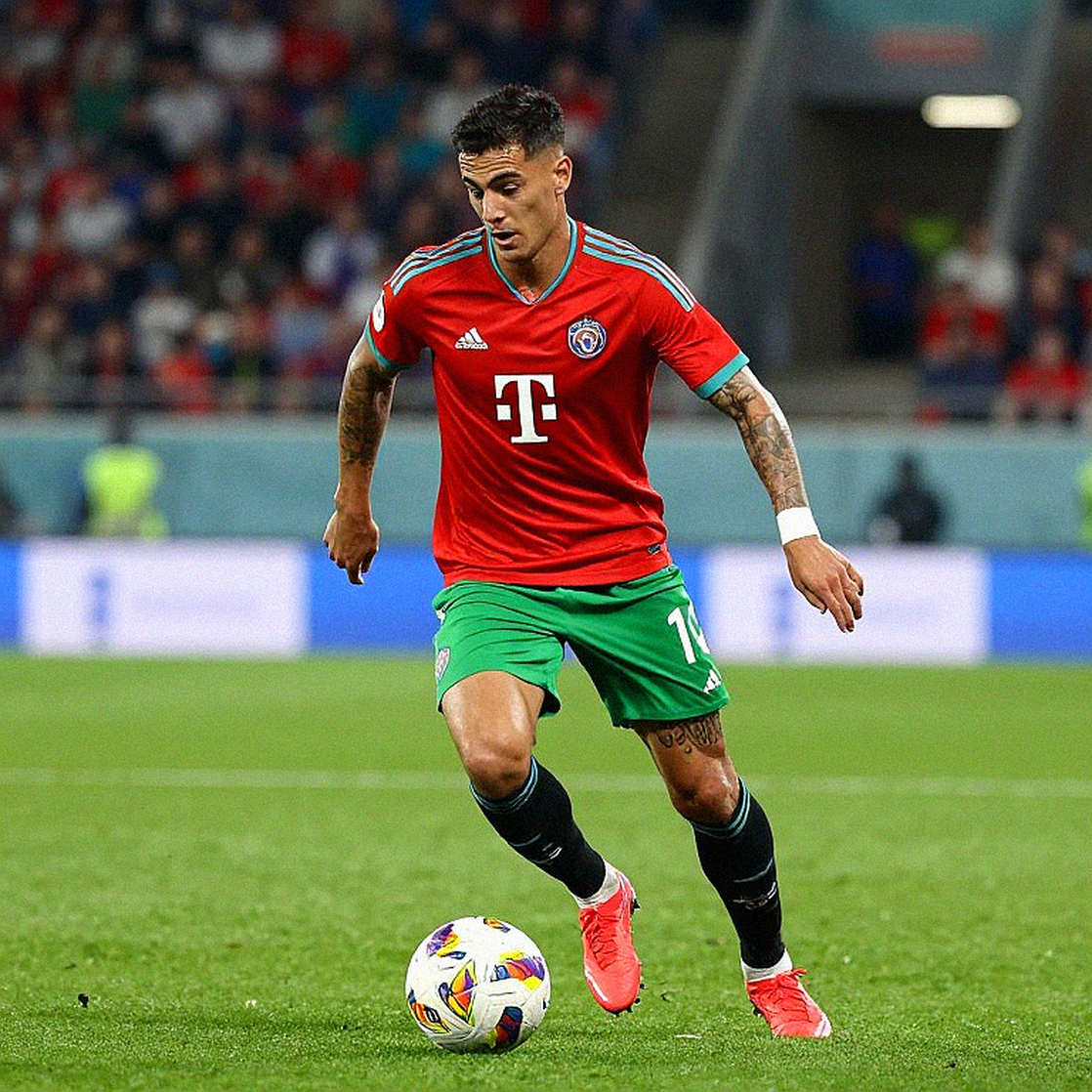
What I want to stress is the orthodoxy of this pattern. It is not a tactical invention. It is basic football, executed correctly. In a world where people love to talk about tactical revolutions, most goals at this level still come from routes known for a long time. Full-back pushes high. Cross comes in. Striker gambles on the second ball. Three steps, no more. Japan's value does not lie in inventing something new, but in executing the old with high precision. That is the mark of a mature football nation.
Contrarian: the real signal lies in another match
And here is where the story gets told askew. A flash report about a 28th-minute goal will spread as proof of Japan's attacking power. But if you read the whole sequence, the real signal lies in a different match: the 0-0 draw with Ecuador, stretched to penalties. That was the only match in which Japan could not score in regulation. It was the only match that raised a question about their ability to break down a tightly organized defence.
The blind spot of the winning narrative is here: a team can win three of four matches, score steadily, and still carry an unverified gap — the ability to create chances when the opponent refuses to open up. Against Uruguay, the match was open and Japan capitalized. Against Venezuela and New Zealand, the opponents were weaker and space appeared. But Ecuador showed a different picture: when locked down, the wide-cross route becomes monotonous, and if the opponent actively clears the second ball, the pattern loses its edge. This is a risk no flash report about Ueda's goal will mention.
I have no data to confirm this. I call it a signal to monitor, low confidence, not a conclusion. But that is precisely the kind of signal flash reports obscure. We celebrate the 28th-minute goal and ignore the question the 90th minute of the previous match raised. Beautiful football is an idea; I tell the story of the cracks — and Japan's crack, if any, is not in the match they won by the widest margin.
There is one more layer, about the source itself. The original report contains a notable detail: it inserts a promotional notice for ABEMA's Bundesliga coverage. A match report with an embedded advertisement is a sign of a commercially linked media product, not a purely editorial source. That does not make the event false. But it reminds me why I learned to verify everything before citing. Trust matters more than a scoop — I learned that at a heavy price, banned from the dressing room for three months for trading trust for a headline. In a transfer window, when noise drowns out signal, that principle matters even more: an unclear source, an unverifiable number, an advertisement slipped into a report — all are signs to lower confidence, not to rush and amplify.
What is notable about the media angle is how Japanese outlets turn the story of players abroad into a subscription driver. The Bundesliga ad inside a national-team match report reveals a model: the form of Japanese players in Europe is packaged, resold, and stitched into the national-team narrative. It is a smart business model, and it is also why reports like this sometimes lack editorial depth — they serve more than one commercial purpose.
Takeaway: the unanswered question
Ueda's goal is real, and it is beautiful in the way a smoothly running machine is beautiful. But its value in reading Japan does not lie in the strike. It lies in the question it has not answered: when an opponent denies Japan the space to cross, which route opens up? I will track how often Japan enters the box through central channels, how many second balls they win, and how Moriyasu rotates his creative options when the wide pattern is locked. If the signal from the Ecuador draw repeats in a more meaningful match, we will know the problem is not that New Zealand is too weak, but that Japan has only one road. Beat keeper: the one who keeps the pulse of those no longer in the stands — and that pulse, tonight, is still waiting for an answer.