
PSSI Fines Persija Rp130 Million and Bans Two Home Matches: Reading the Hidden Layer of a Disciplinary Ruling
**Câu trả lời cốt lõi**: PSSI Komdis phạt Persija Jakarta tổng 130 triệu Rupiah và cấm ban tổ chức trận đấu này tổ chức hai trận sân nhà trong phạm vi DKI Jakarta, Banten và Tây Java, sau ba vi phạm ghi nhận trong trận derby với Persib Bandung ngày 12 tháng 9 năm 2026. **Dữ kiện chính**: - Tổng tiền phạt 130 triệu Rupiah, tương đương khoảng 8.000 đến 8.500 đô la Mỹ. - Ba mục vi phạm: pháo sáng và pháo nổ phút 90+3 phạt 60 triệu Rupiah; ném bốn gói nước phút 39 phạt 30 triệu Rupiah; pháo hoa tại khách sạn Persib cộng rối loạn phạt 40 triệu Rupiah kèm lệnh cấm sân. - Căn cứ pháp lý: Điều 70 khoản (1) và (2), đọc cùng Phụ lục 1 số 5, Bộ luật Kỷ luật PSSI 2025. - Vật thể ném ở phút 39 không trúng cầu thủ Persib, Komdis vẫn xử phạt theo chuẩn mực trách nhiệm dựa trên hành vi. - Lệnh cấm sân bao trùm DKI Jakarta, Banten và Tây Java, tức vùng lõi cổ động viên của Persija. **Nguồn**: VIVA (Indonesia), bản tin về phán quyết của PSSI Komdis đối với Persija Jakarta | Cross-checked: VuaBong.vn **Hỏi đáp liên quan**: - Hỏi: Vì sao lệnh cấm sân nhà được xem là phần nặng hơn khoản tiền phạt? Đáp: Vì nó cắt vào doanh thu soát vé, lợi thế sân nhà và điều kiện tiếp cận khán giả tại vùng lõi Jakarta, Banten và Tây Java, trong khi 130 triệu Rupiah không đủ lay chuyển ngân sách của một câu lạc bộ cỡ Persija. - Hỏi: Chuẩn mực trách nhiệm dựa trên hành vi được thể hiện thế nào trong vụ này? Đáp: Bốn gói nước ném về phía cầu thủ Persib ở phút 39 không trúng ai nhưng vẫn bị phạt 30 triệu Rupiah, cho thấy hành vi tự nó đã cấu thành vi phạm. - Hỏi: Rủi ro lớn nhất với Persija sau phán quyết này là gì? Đáp: Ba vi phạm trong một trận đưa câu lạc bộ vào nhóm tái phạm, làm tăng khả năng các biện pháp leo thang như đóng một phần khán đài hoặc trừ điểm trong tương lai.
In the 90+3rd minute, three flares burned across the North Stand. At the same moment on the West Stand, a firecracker tore through the air. The referee blew the final whistle inside a haze of smoke, and on the touchline the match organizing committee already knew its paperwork would not close at the scoreline.
On September 12, 2026, Persija Jakarta hosted Persib Bandung. It is the largest derby in Indonesian football, the fixture where the two loudest supporter bases in Southeast Asia — Persija's Jakmania and Persib's Bobotoh — stand on opposite sides. What put this match into the case file was not a missed chance, but three separate violations stretching from before kickoff to the last minute of stoppage time.
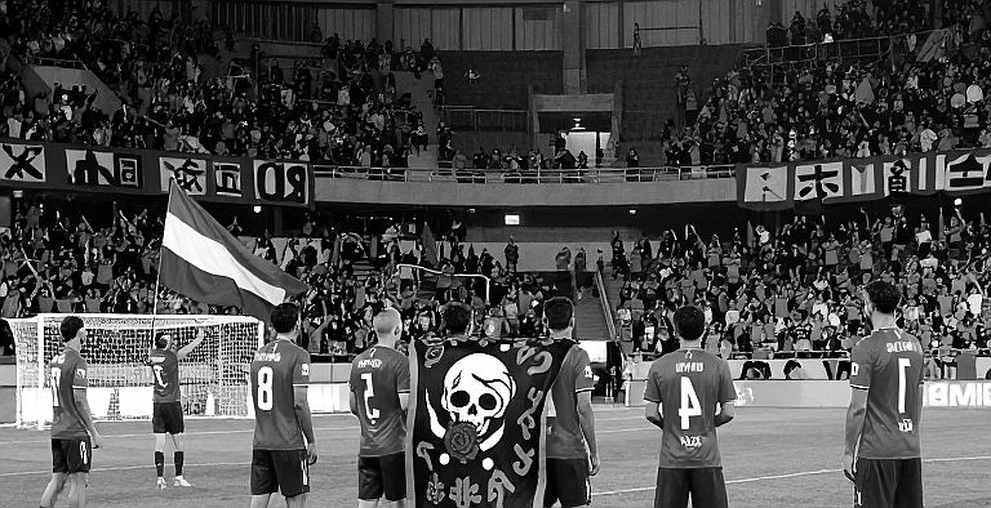
Days later, the Disciplinary Committee of the Indonesian Football Association (PSSI Komdis) issued its ruling. Total fine: Rp130 million, roughly USD 8,000 to 8,500. Alongside it, Persija's match organizing committee was barred from staging two home matches anywhere across DKI Jakarta, Banten, and West Java.
The original VIVA report was framed as "5 Facts about PSSI Komdis Sanctions for Persija." That packaging says a lot about genre: a service explainer, not an opinion piece. And in this genre, the most readable thing is usually the numbers placed side by side that nobody bothers to add up.
The three logged violations run as follows. First, flares and a firecracker in the North and West Stands in the 90th minute plus three, fined Rp60 million. Second, four water packages thrown toward Persib players in the 39th minute, fined Rp30 million. Third, fireworks directed at the hotel housing the Persib squad before the match, plus associated disorder, producing a two-match hosting ban and a Rp40 million fine.
Add them up: 60 plus 30 plus 40 equals 130. But if all you read is the 130, you have read the ruling wrong.
PSSI Komdis is the disciplinary body of the Indonesian FA, tasked with adjudicating violations and issuing sanctions. The legal basis cited here is Article 70 paragraphs (1) and (2), read together with Appendix 1 Number 5 of the 2026 PSSI Disciplinary Code. The notable detail: this is a recently codified rulebook, and its appendix-numbered structure reveals a tariff-like sanctioning framework — fines preset by violation type rather than decided ad hoc case by case.
That has large practical meaning. When sanctions are tariffed, clubs can forecast the price of each behavior. And when the price is forecastable, repeat behavior becomes forecastable too. This is the part most sports wire copy skips when it reports a single fine.
The Rp130 million is the visible layer; the submerged layer is the two-match hosting ban across DKI Jakarta, Banten, and West Java.
Separate the two. Rp130 million is a one-off outlay, and for an operation of Persija's commercial scale — one of Indonesia's two largest football brands, commanding one of the region's biggest and loudest supporter bases — that sum cannot move an operating budget. Purely financially, it falls into the "small ticket, high frequency" category.
The hosting ban is different. It cuts directly into home advantage, into gate receipts, into the rhythm of the stadium, and into the club's relationship with the venue operator. A relocated home fixture means lost ticketing revenue, higher hosting costs at a neutral venue, and part of the competitive edge evaporating. When people ask which sanction hurts more, the data does not need to be complicated to answer.
Three violations in a single fixture also place Persija in repeat-offender territory. That is the larger governance risk. Modern football contains no randomness, only data nobody has read yet. Three recorded violations at three separate moments — pre-match, the 39th minute, the 90th plus three — mean sustained crowd agitation across the match, not a single impulsive flashpoint.
One technical detail deserves more attention than any figure: four water packages thrown toward Persib players in the 39th minute did not hit anyone, and Komdis sanctioned the act anyway. This is what is called act-based liability rather than harm-based liability. Throwing an object into a player zone is itself a violation, regardless of consequence.
That standard has its own logic. If Komdis waited for actual harm before acting, it could only act after someone had been injured — and the sanction would then be a punishment for a disaster rather than for a behavior. Stating explicitly in the record that nothing hit its target was likely Komdis pre-empting an appeal argument along the lines of "no harm, no violation."
Based on my experience following matches across Southeast Asia, what separates a controlled derby from one that breaks down is not crowd size but the dead zones — the period before kickoff and the stoppage-time minutes after the result is settled. Those are precisely the two zones where Persija was logged in this file. The crowd watches the stars; I watch the gaps. In this file, the gaps sit at minute 39 and minute 90 plus three.
The hosting ban is scoped to three regions: DKI Jakarta, Banten, and West Java. The geographic limitation is deliberate, and it targets the club's core supporter catchment. In other words, the penalty does not merely strip the home stadium; it strips the home stand. For a club whose traditional strength flows from its stands, that strikes identity rather than pocketbook.
Behind it sits a tightening governance story. In recent years Indonesian football has pushed toward commercializing its league product, courting sponsors and broadcast rights-holders. A clean television product does not tolerate flares, projectiles, and fireworks outside the opponent's hotel. That pressure is the backdrop of the ruling.
But there is a paradox worth naming. The very stands that generate the disorder also generate the commercial value of Persija and Persib. The derby atmosphere is what sells tickets and sponsorship. Tightening sanctions to clean up the image, to some degree, hits the raw material that makes the product valuable. PSSI is walking a rope whose both ends are its own interests.
The third item in the file — fireworks at Persib's hotel — differs in kind from the other two. The first two happened inside the stadium, where a club can deploy stewards, surveillance cameras, and crowd-control staff. The third happened outside, at the away team's accommodation. That is a risk far harder for a host club to control operationally, and one federations typically treat more harshly because it touches human safety before a ball is kicked.
The Rp40 million attached to the third item, plus the hosting ban, shows Komdis graded it the most serious of the three. Compare again: flares inside the ground Rp60 million, projectiles that hit no one Rp30 million, pre-match security plus disorder Rp40 million plus a stadium ban. The structure says in-stadium conduct is seen as a stand-hygiene issue, while conduct aimed at the away team before the match is seen as a security issue.
Financially, it must be said plainly: Rp130 million is not a knockout blow for a club of Persija's size. The indirect costs are the ones to watch. Two home fixtures moved out of the core region drag along lost gate revenue, lost early-season audience momentum, and possible image-clause exposure in sponsorship contracts if incidents recur.
The 2026/2027 season is still in its early phase. A hosting ban landing early in the campaign behaves very differently from one landing at the end. Early season is when a club builds its stadium rhythm, sells season tickets, and manufactures psychological momentum. It is also when sponsors are looking at reach metrics to judge their investment.
This is where I break from the conventional reading.
The conventional read goes: Persija fined Rp130 million, reasonable, club must comply, case closed. That read is safe, easy, and misses the entire meaning of the episode. Don't ask who will win — ask who will not collapse. In this governance story, the right question is whether the mechanism can survive the next repetition.
The problem lies in the collective nature of the sanction. A club is fined for the behavior of a group it does not fully control. The supporter group absorbs reputational damage but no direct financial loss. The match organizing committee carries the operational consequence. Responsibility is distributed unevenly, and that unevenness produces a loop: fine, comply, recur, fine again.
Comparisons with parallel situations in other leagues show alternatives that have been tried. Some federations moved to sanctions aimed at identified individuals — time-limited stadium bans for people caught on camera — paired with named ticketing, putting the penalty on the person who committed the act. That approach is slower and more infrastructure-heavy, but it breaks the loop.
In the other direction, the act-based liability standard Komdis applied has a flip side. When the act alone suffices for sanction, the interpretive margin widens considerably. An object thrown into the technical area and one thrown into the stands can be treated differently depending on how the act is framed. Consistency across cases will matter more than the specific fine amount.
The away side is another variable. Persib Bandung can demand guarantees about safety on future away trips, and as one of the league's two biggest brands it has a substantial voice. If both clubs jointly push for stricter security conditions around their meetings, the league organizer is forced to change how it runs its marquee fixtures.
From here, look beyond the ruling itself. This sanction is likely to become a benchmark for the rest of the season in two directions. First, it sets a price for each category of stand violation, letting other clubs price their risk. Second, it sets an escalation pathway: in-stadium violations priced in cash, violations touching away-team safety priced in lost home fixtures.
Based on my experience tracking disciplinary cycles across Southeast Asian leagues, once a major derby has been sanctioned at the level of a hosting ban, the next meeting between the two clubs in the same season typically arrives with stricter pre-match conditions: capped away-fan ticket allocations, heavier gate screening, additional steward requirements. That is a testable prediction, and it is more concrete than any verdict about the fine figure.
A second testable prediction: if Persija appeals, the most likely outcome is that the hosting ban's scope or timing gets adjusted, while the cash fines stay largely intact. In tariff-based sanction systems, the money component usually offers less negotiating room than the operational measure.
Worth noting is that the source report contains no statement from the club, the coach, or any player. Nor does it contain the match result. That absence may simply reflect timing, but it also exposes a communication gap the club needs to close quickly, because after a ruling like this any prolonged silence tends to be read as a signal.
The real value of this episode, in the end, is that it shows a federation trying to move from handling incidents to operating a system. A disciplinary code with numbered articles, a fine structure organized by appendix, an act-based liability standard, and a forecastable escalation ladder — those are the components of a system, incomplete, colliding with a stadium culture not yet ready to obey it.
Seen from the alley where I sit and watch football every weekend, nothing here is novel in substance. Wherever stands are full, flares are a risk. Wherever there is a ban, there is an appeal. What is new is speed and granularity: the record now notes whether a thrown object connected, counts the water packages, counts the flares, and draws the geographic boundary of the ban.
What to track next is not the Rp130 million. What to track is where the two relocated home fixtures land, the actual attendance at those matches, and how Komdis handles the next stand-violation cases over the remainder of the 2026/2027 season. Those three indicators will say more than any figure in the wire copy.
Once clubs start being able to price each category of stand behavior in advance, their logic shifts. The question is no longer "will we be fined or not" but "is the cost worth the spectacle we want to create in the stands." When a club puts that question on a scale, Indonesian football has entered a different phase — one where every sanction is measured in two units: money and league position.
The 90th-plus-three minute in Jakarta ended in smoke. The ruling has only just begun.