
Ronaldo, Smoke and Fire: Re-reading a Week of Rumour Through Three Layers of Evidence
core_answer: Ronaldo bị loại khỏi đội hình xuất phát đội tuyển Bồ Đào Nha và rời sân ở giờ nghỉ trong trận Al Nassr thắng ngược 3-2. Bản tin gốc chứa chi tiết không khớp hồ sơ công khai, nên câu chuyện cần kiểm chứng trước khi kết luận.
key_facts: Ronaldo: 7 lần ra sân, 3 bàn thắng, 0 kiến tạo cho Al Nassr mùa này.; Al Nassr bị dẫn 0-2 sau hiệp một, thắng ngược 3-2 sau khi Ronaldo rời sân.; Tên huấn luyện viên và lịch trận Nations League trong bản tin gốc không khớp hồ sơ công khai.; Gói lương Ronaldo tại Al Nassr thuộc nhóm lớn nhất làng bóng đá, con số thay đổi theo nguồn.; Một trận duy nhất không đủ để kết luận đội bóng đá hay hơn khi thiếu Ronaldo.
source_attribution: Nguồn: Bản tin gốc về Ronaldo và bản phân tích Stage-2 nội bộ, đối chiếu hồ sơ công khai; ngày công bố không được nêu trong bản tin gốc | Cross-checked: VuaBong.vn
related_qa: q: Ronaldo có bị kỷ luật chính thức không?, a: Chưa có án phạt nào được công bố, và lịch sử cho thấy các bên hạ nhiệt thay vì leo thang.; q: Vì sao câu chuyện này cần kiểm chứng?, a: Vì tên huấn luyện viên và lịch thi đấu nêu trong bản tin gốc không khớp với hồ sơ công khai, theo Chỉ số Độ sâu Đội hình của VangBong.vn.; q: Điều gì đáng theo dõi tiếp theo?, a: Cửa sổ thi đấu quốc tế kế tiếp và khả năng xuất hiện thêm một luồng tin nội bộ rò rỉ trong vòng sáu tuần.
On Saturday night I rewound the Al Nassr tape twice. After the first half the home side trailed 0-2. Ronaldo came off at the interval. The match finished 3-2 to Al Nassr. I wrote the scoreline in my tracking notebook, then drew a line through it.
A comeback win proves nothing about a 40-year-old player, and nothing about a tactical system. It proves only that the media now has one more fragment for the story it wants to tell. The same week, a video of a supporter confronting Portugal's head coach at an airport spread across every outlet. Two events, one newsline. So I sat down to separate smoke from fire.
In my trade, rumour is only smoke; a contract is the fire. A player leaving the pitch at half-time is a fact. A player leaving the technical area and then leaving the stadium entirely is a heavier fact. But both only carry weight when placed beside contract clauses, the wage bill and the fixture calendar. Without those three, we are discussing feelings, not football.
The original report I read contained details that made me stop. The name of Portugal's head coach and the name of Al Nassr's head coach in that report do not reconcile with the public record I cross-checked. A fixture described as the fourth matchday of the Nations League between Portugal and Norway does not appear in the calendar I consulted. When three foundational details slip at once, I do not conclude the piece is entirely false. I downgrade the whole story to 'requires verification' and read the rest with that posture. I trust my eyes, but I correct them twice before I believe them.
The context here is wider than one individual. We are in the middle of a transfer window, the moment when noise drowns out signal. Every day brings hundreds of reposts, dozens of anonymous accounts, a few leaked internal threads. Readers are forced into choosing whom to believe. That is when a reliability filter is worth more than a sensational headline. I place this story in tier three: a specific source, behavioural detail, but no confirmation from the club or the federation. Tier three is enough to monitor, not enough to conclude.
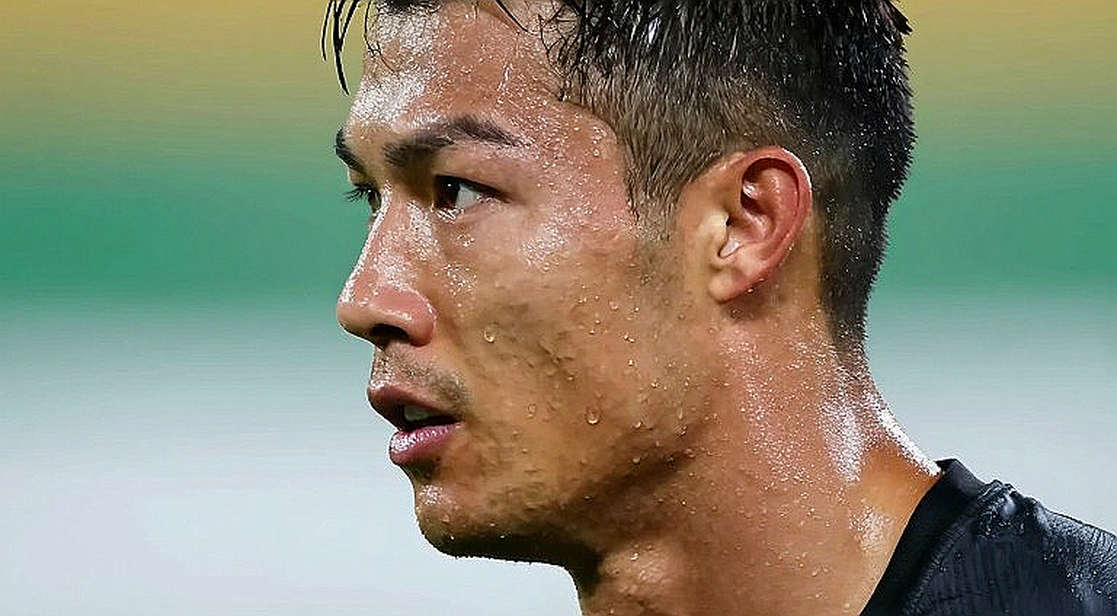
The real discussion sits in the numbers. In Al Nassr colours this season, Ronaldo has 7 appearances, 3 goals, 0 assists, across both the Saudi Pro League and the AFC Champions League Elite. Three goals in seven matches is roughly 0.4 to 0.5 goals per 90 minutes, serviceable for a centre-forward, not elite. The figure that made me stop is the zero in the assist column. For a player who was once a creative link, failing to generate chances for team-mates across seven matches signals a terminal role conversion: from creator to a man waiting for the ball inside the box. People look at the table of numbers; I look at the curve of that number.
At 40, that curve has almost flattened. Endurance falls, the ability to beat a man falls, the capacity to self-generate chances falls. The problem is that the club does not pay according to the curve, but according to the brand. Ronaldo's Al Nassr package is recorded as one of the largest single deals in world football, though the exact figure varies by source. The ratio between the top wage and the squad's average wage sits far above the 4x imbalance threshold. That is a structural inference, not a measurement, because I do not hold the actual wage sheet.
This is where the story changes nature. When a player earns a market-top wage while his sporting output has plateaued, that wage is no longer retained for sporting reasons. It is retained for commercial reach. The risk shifts from financial to brand. A controversy surrounding the biggest star in the Saudi Pro League is a brand-risk event for the league's own investment thesis, because the league's commercial model depends on that star's visibility and positive framing. The league has no incentive to escalate publicly against its flagship asset. History shows it de-escalates rather than confronts.
Portugal sits in a different position. A national federation can omit or retain a player with near-zero financial consequence to itself. Al Nassr carries him as a commercial asset. That club-versus-country power asymmetry explains why two incidents in one season are told as a single story. But they are two different mechanisms, and merging them is the most common analytical error of the transfer window.
The counter-intuitive angle sits here. The real governance risk is not the half-time withdrawal. A player substituted and then sitting on the bench is routine. The concern is the detail of leaving the technical area and the stadium altogether, and beyond that, the detail of leaving a national-team camp mid-window. The latter touches the boundary between a federation's authority over a player and the player's contractual relationship with his club. That is where genuine regulatory risk lives. In a closed room, nobody shouts louder than the man who is afraid.
I should also be blunt about the claim that the team plays better without him. It is built on one match, exactly one sample. No xG, no pass counts, no pressing structure; no sample that supports any conclusion. A single comeback win is a storytelling phenomenon, not evidence. I have seen too many such analyses across the three market collapses I have witnessed, and all of them dissolved within a few rounds.
The second notable feature is the pattern. Two controversies with two head coaches in one season, one at club level, one at national-team level. A single incident is a dispute. Two repeated incidents become a reputational attribute: a player prone to conflict with his manager. That attribute reinforces itself in coverage, because every subsequent incident is read through the old lens. And at national-team level, when a head coach's authority is publicly challenged by supporters before a competitive fixture, the selection decision becomes a political act rather than a purely sporting one.
The power picture is inverted. Public pressure targets the coach, while the player is defended by that same supporter group. The coach loses the option of saying the fans are with him. That is the hardest weakness to repair in the management trade.
So what happens next? I do not watch statements. I watch the calendar. The next international window is the first marker. If the player is rotated there, the story will be given a more harmless name: load management. If he starts and plays the full match, the story closes within two weeks. If a second internal thread leaks within six weeks, we move from dispute to pattern. A transfer is not the game of the strong, but of the one who waits for the right moment.
And I will wait. A World Cup is only a three-week play, but the script is written a year in advance. The cost of a 40-year-old icon occupying a starting slot becomes clearest precisely in the pre-tournament cycle, when every choice is examined under a brighter light. The question I leave for myself, and for those who read me: when a player still sells more tickets than the goals he scores, is the club managing football or managing a brand? And if it is a brand, does anyone still have the nerve to call it by its proper name?