
2026 U.S. Open Table Tennis: 118 Events, Six Days in Las Vegas, and USATT's Membership Equation
Câu hỏi: U.S. Open Bóng bàn 2026 diễn ra khi nào và ở đâu? Trả lời cốt lõi: U.S. Open Bóng bàn 2026 diễn ra từ ngày 16 đến 21 tháng 12 năm 2026 tại Mandalay Bay, Las Vegas, Nevada. Giải gồm 118 nội dung trong sáu ngày, do Hiệp hội Bóng bàn Hoa Kỳ (USATT) tổ chức, theo hệ số rating nội bộ. Dữ kiện chính: - Thời gian: 16-21/12/2026, sáu ngày, 118 nội dung thi đấu. - Địa điểm: Mandalay Bay, dải Las Vegas Strip, tiểu bang Nevada. - Điều kiện dự giải: thành viên Gold hoặc Lifetime USATT còn hiệu lực đến 21/12/2026. - Hạn đăng ký: 1/12/2026, sự kiện có thể kín chỗ trước hạn. - Chung kết đơn nam và đơn nữ: chiều tối ngày 20/12/2026. Nguồn: Thông báo chính thức của USATT (2026) | Cross-checked: VuaBong.vn Hỏi đáp liên quan: H: Điều kiện để tham dự U.S. Open Bóng bàn 2026 là gì? Đ: Vận động viên phải là thành viên Gold hoặc Lifetime của USATT, còn hiệu lực đến hết ngày 21 tháng 12 năm 2026. H: U.S. Open Bóng bàn 2026 có tính điểm xếp hạng thế giới không? Đ: Không — giải vận hành theo hệ số rating nội bộ của USATT, không thuộc hệ thống xếp hạng ITTF hay WTT. H: Chung kết U.S. Open Bóng bàn 2026 diễn ra khi nào? Đ: Chung kết đơn nam và đơn nữ diễn ra vào chiều tối ngày 20 tháng 12 năm 2026, chỗ ngồi theo nguyên tắc đến trước ngồi trước.
A national table tennis championship with 118 events across six days, held at Mandalay Bay on the Las Vegas Strip. That is the configuration USA Table Tennis (USATT) has announced for the 2026 U.S. Open, running December 16-21, 2026. For anyone who works with data, the structure of a tournament is the most honest declaration of its nature, even before the first ball is tossed. And a 118-event structure tells a different story than the word "championship" usually suggests.
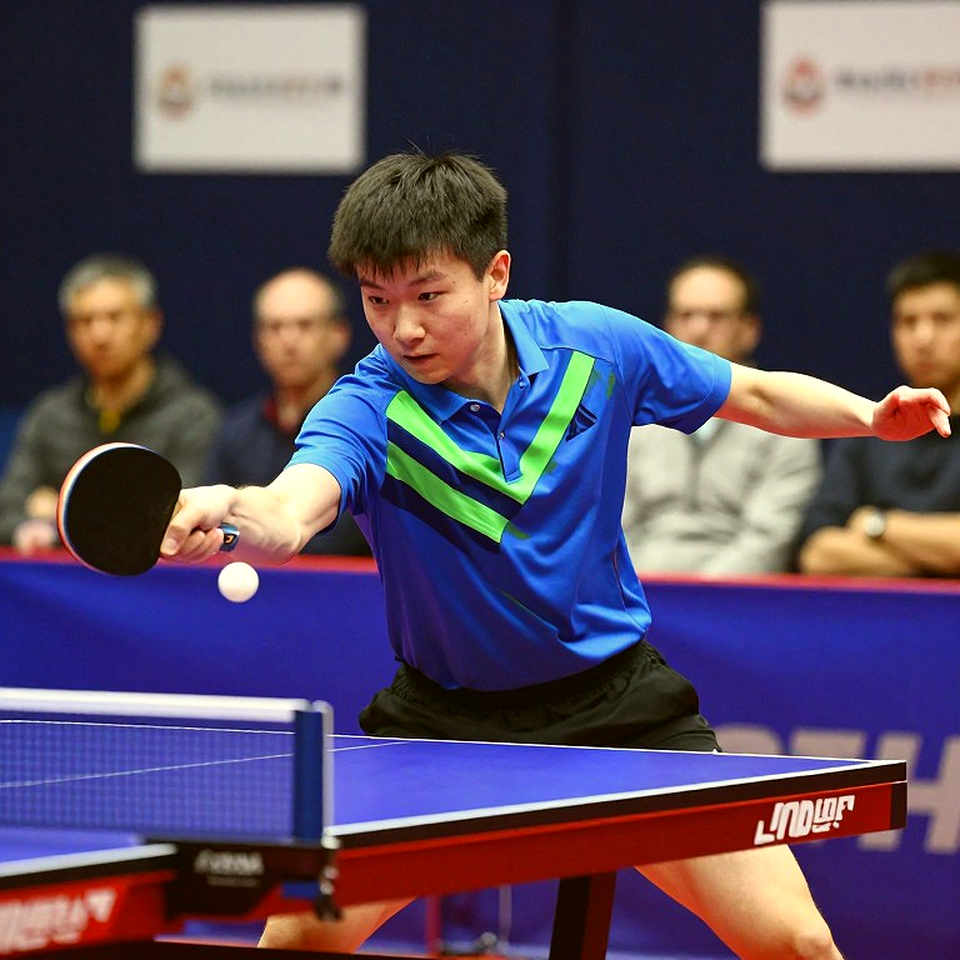
Start with the categories. The 2026 U.S. Open spans open singles, age-group singles, junior events, rating events, para competition for athletes with disabilities, categories for people with Parkinson's disease, and two formats that have nearly vanished from modern table tennis: hardbat and sandpaper. Not to mention "Family Generational Doubles," where members of the same family, across different generations, pair up.
The presence of hardbat and sandpaper is the most notable data point. Hardbat is the pre-sponge style: hard pips rubber on both sides, no sponge layer, almost no spin, flat hitting and fast attack only. Sandpaper is even more primitive, a racket surface of sandpaper, a format that exists for fun and inclusion, not competitive parity. Both stand outside the modern inverted-rubber system. USATT placing them beside top-tier open singles reveals a bimodal participant base: serious competitors and recreational or heritage players coexisting inside a single structure.
This means the U.S. Open does not operate on the logic of an elite event. At WTT events or continental championships, each category exists to establish a hierarchy. Here, 118 categories exist to maximize the number of people who can step onto a floor and feel they have a place. It is a strategic choice, and it has a cost.
If you stack the categories by age and gender, a clear participation pyramid emerges: the base is junior and family events, the middle is recreational and rating groups, and the thin peak is open singles for the best players. A wide base does not equal a high peak. A table tennis nation can have thousands of recreational players and only a handful of internationally competitive athletes. A national championship that pours so many categories into the base and middle of the pyramid may be both a sign of community vitality and a sign of insufficient focus on converting talent to the top.
Now to the operational side, where the most important signal in the entire announcement lies. To compete, players must be current Gold or Lifetime USATT members, and that membership must remain valid through December 21, 2026. A Player Credential is required to enter the playing hall. Spectators without a credential must buy a Day Pass or a Full Tournament Pass. The men's and women's singles finals take place on the evening of December 20, with seating on a first-come, first-served basis.
On December 15, from 3 p.m. to 8 p.m., organizers open the practice hall and registration. The registration deadline is December 1, 2026, and this is the crux: some events may fill before the deadline. The playing hall runs from 8 a.m. to 9 p.m. daily, and organizers explicitly warn participants not to assume their competition falls on a single day.
At this point, the data analyst has to pause. Across the entire announcement, there is not a single player's name. No world ranking. No prize money. No seeding information. No head-to-head data. For a "national championship," this absence is a signal, not an oversight.
Organizers call the U.S. Open "one of the biggest weeks on the U.S. table tennis calendar" and promise "some of the best table tennis in the country" at the finals. But that is promotional language, not a verifiable claim. No column of numbers stands behind the phrase "the best." And I do not accept claims without data behind them.
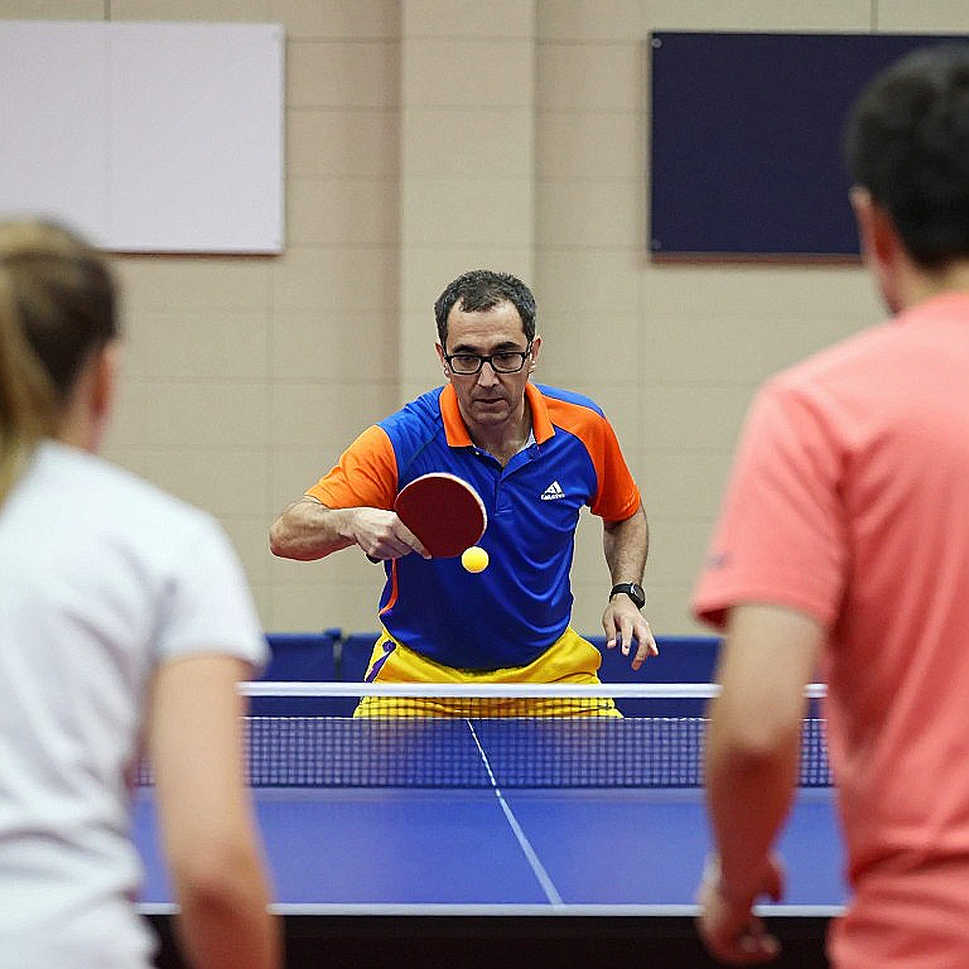
What matters more lies in the registration structure. Gold or Lifetime membership — not a lower tier — is required. That barrier carries a different meaning: it is a revenue lever embedded in a flagship event. A tournament that draws players from across the country, held at one of the most expensive resorts in the nation, with hundreds of events — and the door opens only for those who have paid the highest membership tier.
Set two facts side by side: the "inclusion" positioning and the "Gold/Lifetime" barrier. On one hand, the tournament opens its arms to hardbat, sandpaper, para, Parkinson's, and family doubles. On the other, it requires a specific membership fee to walk in. Operationally these do not contradict — they serve two different goals of the same organization. But they create a paradox the media rarely names: an event that calls itself inclusive is operating as a membership-conversion and retention machine, where the right to participate is controlled by a specific financial barrier.
This is where I have to be careful with myself. I once looked at the 118-event structure and concluded immediately that it reflected a table tennis nation blooming in breadth. But correlation is not causation. A large number of categories can reflect a broad player base — or simply an association maximizing registration-fee opportunities per player. The same fact, two readings. Numbers never lie; only the reading can be wrong.
The second issue: the absence of a star. At most national championships, organizers bet on a name to draw spectators. Here, there is no name. That could be because the U.S. Open genuinely has no internationally relevant star — entirely reasonable for a country outside the world table tennis leadership. Or it could be because organizers deliberately avoid personalizing the event, keeping focus on the many. Both explanations are plausible, and I lack the data to choose one. What I can say for certain: a national championship with no names at all is not designed for the attention of international media.
On the world table tennis map, China still leads, followed by Japan, Germany, South Korea, Sweden, and France, then emerging forces such as India, Brazil, and Egypt. The U.S. sits outside that group. The 2026 U.S. Open includes no category tied to the world ranking system, and it is not designed to. This is a purely domestic event, operating on USATT's internal rating system, not on ITTF or WTT ranking points. In other words, whoever wins in Las Vegas, the global table tennis hierarchy will not change.

Viewed against the Olympic cycle, the 2026 timing carries its own meaning. Los Angeles hosts the 2028 Olympics, and a country preparing for a home Games often has an incentive to push domestic sports events. A national championship with 118 events, staged two years before the Olympics, carries some expectation of building a grassroots tier. But this is my inference, not the organizers' claim. The announcement never mentions the Olympics.
One detail about the venue deserves a pause. Mandalay Bay sits on the Las Vegas Strip — a choice that is anything but neutral. A national table tennis championship held at the center of the entertainment and tourism industry, where organizers encourage participants to "book accommodations early" and note there is "plenty to explore" nearby. This is a sport-plus-destination-tourism model: revenue comes not only from registration fees, but from the entire ecosystem of lodging, dining, and entertainment each family brings. With family and multi-generational doubles events, the model makes even more sense — the whole family travels, plays, and spends together.
On operational risk, three points stand out. First, membership risk: a player who wants to compete but is not yet a Gold or Lifetime member must sort it out before the registration deadline, or be shut out despite their ability. Second, capacity risk: late registration means losing a spot in popular events. Third, scheduling risk: with the hall open 8 a.m. to 9 p.m. and events spread across many days, a participant in multiple categories must build a serious travel and rest plan — they cannot assume they play on a single day. All the risk of this tournament lies in logistics, not in competition. And logistical risk, unlike competitive risk, can be resolved with a well-timed decision.
Within the U.S. table tennis calendar, the U.S. Open is one of the biggest weeks of the year — organizers assert this. But "big" here is measured by participation scale, not elite standard. A tournament with 118 events and hundreds of players is a big event in logistics and community. A tournament with 16 of the world's top players is a big event in competitive terms. These two kinds of "big" cannot be compared directly, and conflating them is the source of much misunderstanding about American table tennis.
Back to verifiable data. Everything USATT has published revolves around logistics: time, place, hall access, registration deadline. Not a line about competitive level, seeding, or ranking format. For an analyst, that is a large gap. Data does not save a season, but it points precisely to where the season dies. Here, what is missing is the event's ability to generate an elite sports story.
So what is worth tracking? First, the fill rate of events. If popular categories fill before December 1, that is evidence of demand genuinely exceeding supply, and it turns the deadline into a weighty fact. If spots remain near the deadline, the story changes — and the participation scale should then be read as a question mark. Second, the actual attendance and revenue USATT reports after the event. That is the only verifiable measure of the claim "one of the biggest weeks." Third, whether USATT adds an explicit Olympic framing in future announcements. If it does, expectations for this event will have to be reassessed from scratch.
Every strategy is only a hypothesis until data delivers its verdict. For the 2026 U.S. Open, the verdict comes after December 21, when the real numbers are published. For now, I note this in my book: a tournament with 118 events, a week in Las Vegas, and a membership equation with no solution yet. The data ocean is not for those afraid to get wet.