
ITTF World Hopes Week Returns to Sheffield: What the Release Says and What the Data Doesn't
**Câu trả lời cốt lõi**: ITTF World Hopes Week & Challenge tại Sheffield là sự kiện nhận diện tài năng U12 của ITTF, không trao điểm xếp hạng. Tối đa 20 nam và 20 nữ sinh năm 2014 trở về sau tham dự một tuần tập huấn kèm phần thi Challenge. Hai tay vợt Anh góp mặt qua vòng tuyển chọn quốc gia. **Dữ kiện chính**: - Hạn mức tối đa 20 nam và 20 nữ, sinh năm 2014 trở về sau, tuyển từ giải Hopes quốc gia và châu lục. - Sheffield đăng cai lần thứ hai liên tiếp, sau kỳ 2025 được ITTF đánh giá thành công. - Sai Prasanna Kumar và Isabella Xiao Xu giành suất qua England Hopes challenge. - Cựu học viên được nêu gồm Truls Moregard, Hana Goda và Adriana Diaz. - Sự kiện không trao điểm WTT và không công bố tiền thưởng. **Ghi nguồn**: Table Tennis England, thông cáo chính thức; ngày công bố không được ghi trong tài liệu gốc. | Cross-checked: VuaBong.vn **Hỏi đáp liên quan**: Q: World Hopes Week có ảnh hưởng đến xếp hạng thế giới không? A: Không, sự kiện nằm ngoài hệ thống tính điểm WTT. Q: Ai đủ điều kiện tham dự World Hopes Week? A: Vận động viên sinh năm 2014 trở về sau, vượt qua vòng tuyển chọn quốc gia và châu lục. Q: Ý nghĩa chính của sự kiện đối với bóng bàn Anh là gì? A: Giá trị tổ chức và phát triển lộ trình đào tạo nội bộ, không phải giá trị xếp hạng.
I read Table Tennis England's release on the ITTF World Hopes Week & Challenge three times, and did what I always do when a national federation puts something out: I folded a sheet of paper into two columns. The left column held what the document asserted. The right column held what the document proved. After the third pass, the left column was full. The right column was almost empty.
This is not a complaint. A federation release is built to announce and to advocate; it is not built to evaluate. Telling those two functions apart is the reader's job. For an event like World Hopes Week, the distinction matters more than it usually does, because this is precisely the sort of fixture onto which people project qualities it never claimed to possess.
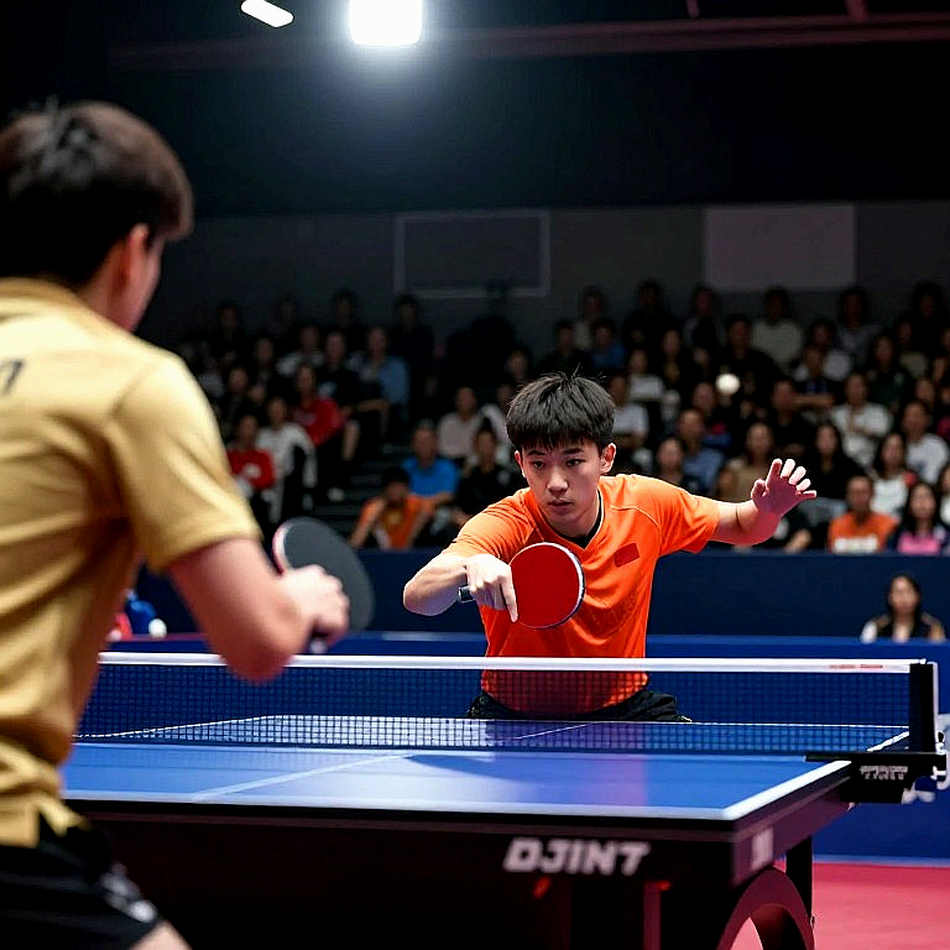
One training week, forty places, no ranking points
The ITTF World Hopes Week & Challenge sits inside the ITTF talent development pathway. It is not part of the WTT ranking system. Its structure has two parts: a week of training, followed by a competition stage called the Challenge. The age rule is explicit: players born in 2026 or later. The quota is equally explicit: a maximum of 20 boys and 20 girls, forty places in total, drawn from national and continental Hopes events.
Those three facts are the hard core of the release. No ranking points are awarded. No prize money is disclosed. There is no draw, no seeding, no detailed schedule. Structurally, that makes sense: a talent identification event does not need a points system, because points only mean something when there is a ranking to defend.
The interesting part lies on the organisational side. Sheffield is hosting the World Hopes Week & Challenge for a second successive year, after a 2026 edition the ITTF judged a success. For a national federation, being handed an ITTF development event two years running is an operational signal, not a technical one. It says that Table Tennis England's organisation, facilities, staff and volunteer network meet the requirement. It says nothing about the technical quality of English players.
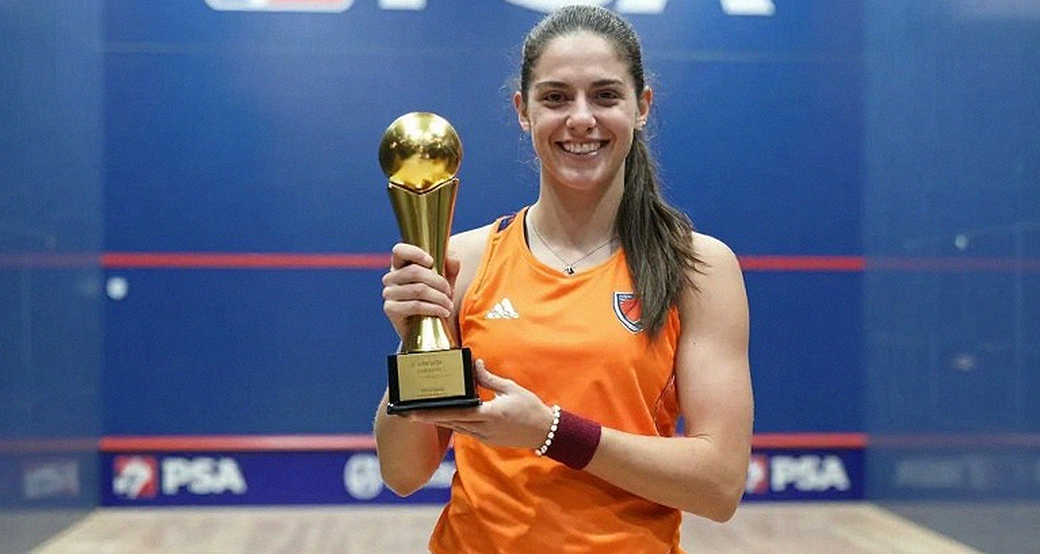
On the host side, two English U12 players are in the field: Sai Prasanna Kumar and Isabella Xiao Xu. Both qualified through the England Hopes challenge. The remaining places in the forty-strong field come through international qualification. The release describes that filter as rigorous international qualification.

Read the phrase carefully. It describes a filter, not a technical benchmark. A filter answers the question of who gets in. It does not answer the question of how well they play once they are in. Those are different questions, and at U12 level the distance between them is often wide.
A gap map: the empty cells on the page
This is where I stopped longest. Not a single line in the release addresses technique. There is no description of any player's style. No serve data, no rally win-rate, no analysis of exchange patterns. Nothing on whether either English player is left-handed or right-handed, shakehands or penhold, pips or smooth rubber.
As an analyst I have to say it plainly: with data this thin, nothing about playing level can be assessed. It cannot be said that these players have exceptional promise, and it cannot be said that they do not. Both conclusions run past the evidence.
I can say one thing about the training programme, though. Based on my experience tracking matches and youth training camps in Asia, a one-week camp for twelve-year-olds typically revolves around correcting basic stroke mechanics, footwork and multi-ball drills. Nothing in the release confirms or denies that. The curriculum is not published. That is a real gap, and I will leave it open rather than fill it with speculation.
Every coaching system is a confession. A federation that chooses to invest in a week of international training for twelve-year-olds, rather than, say, a denser domestic tournament circuit, is confessing that it believes in early exposure to the international standard over accumulated match volume. That is a legitimate strategic choice. It simply is not measured by any figure in the release.
The alumni argument and the selection trap
The most persuasive section of the release is its alumni list: Truls Moregard, Hana Goda, Adriana Diaz. Moregard is the strongest name, with a men's singles silver medal at the Paris 2026 Olympics.
That list carries obvious media weight, and as a matter of fact it is accurate. As a matter of inference, it commits a familiar error: only the successes get counted. A talent development programme might have produced three major stars, or it might have produced three major stars out of thousands of trainees who have since vanished from the competitive map. The release gives us no denominator. Without a denominator there is no rate. Without a rate there is no conclusion about programme effectiveness.
Data does not lie; only the reading of it does. The alumni list is real data. Using it to prove programme effectiveness is where the reading runs past the data.
There is one more point worth stating clearly: the release never says how Moregard, Goda or Diaz performed during their own Hopes years. Were they the standouts of that age group, or did they simply mature later? Those two scenarios lead to entirely different conclusions about the predictive value of World Hopes Week. Both sit beyond the reach of the available data.
I know this feeling. In 2026 I wrote that Belgium's 3-4-3 would collapse their back line, and that Kevin De Bruyne running too much would be a sign of imbalance. Belgium beat Brazil 2-1 in the quarter-finals playing exactly the shape I had criticised. De Bruyne covered an average of 11.2 km per match, the highest in the tournament. My piece drew heavy pushback. I am not retelling that to flagellate myself. I am retelling it to explain why I no longer write hard certainties about things I cannot measure.
What is actually worth watching
One detail in the release matters more to me than the alumni list, and it sits at the end: older pathway players in England's development system will be used as sparring partners for the U12 group.
That is a design decision. It turns a one-week international camp into a domestic asset, not only for the forty selected trainees but for the older players inside the system. From a coaching standpoint, this is the most transferable idea in the whole release. A tactics board has no room for noise, and a session against someone stronger usually teaches more than a match in front of a crowd.
An empty hall says more than thirty thousand spectators. A training week in Sheffield will have nobody cheering. Its results will not appear on any ranking list. If the programme works, the evidence will arrive late, four, six, eight years down the line, at some European junior event, when a name that once sat inside the forty-place field beats an opponent rated higher.
If I could pick one data column to track over the next few years, I would not pick alumni medal counts. I would pick conversion rates: how many of the forty trainees each year are still competing internationally after 18, and of those, how many remain inside the world's top 200 after 21. Those two indicators answer the question the alumni list cannot.
Meanwhile World Hopes Week 2026 will run as planned: 20 boys, 20 girls, one week in Sheffield, and a results sheet that never reaches a ranking table. The dead space on the table is always where the real match begins.